Cold Weather NFL Totals and Spreads Betting Strategies
 Available in US
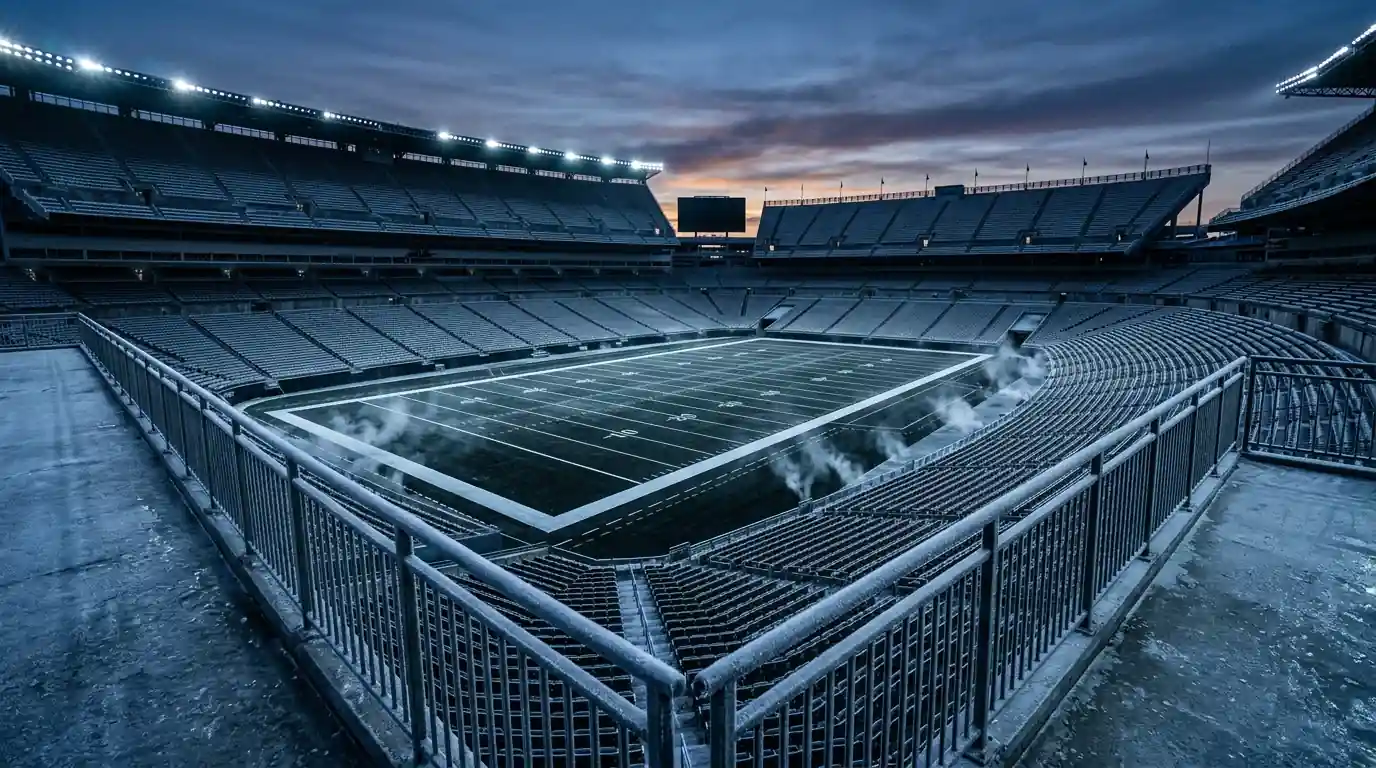
January 2024, a playoff game at Arrowhead Stadium. The temperature at kickoff reads minus 4 degrees Fahrenheit — that is minus 20 Celsius for those of us raised on the metric scale. Both offences look sluggish. Both kickers look terrified. The total had opened at 43 and closed at 39. The game finishes 26-7. Under by six. Textbook cold-weather suppression. I had the under at 41 from midweek, and it landed comfortably.
But here is what makes cold-weather betting genuinely interesting rather than merely predictable: it is not always an under play. In fact, one of the most counter-intuitive patterns in NFL weather data is that cold games without wind or snow hit the over 60% of the time. Temperature alone is a blunter instrument than most bettors assume, and the real edge lies in understanding when cold suppresses scoring, when it does not, and what the academic research says about which rosters are physiologically adapted to perform in it.
Temperature and Scoring Curve Models for NFL Bettors
I used to think cold weather meant fewer points, full stop. Then I built a temperature-scoring model across eight seasons of data and discovered the relationship is not a straight line — it is a curve with two distinct zones of suppression and a surprisingly resilient middle.
Temperatures above 85 degrees Fahrenheit or below 25 degrees Fahrenheit reduce NFL scoring by approximately 8%. The heat effect operates through fatigue and dehydration — players slow down in the fourth quarter of September games in Miami or early-season Arizona, and offensive efficiency declines as legs go heavy. The cold effect operates through grip, muscle stiffness, and reduced ball velocity off the quarterback’s hand. Both extremes suppress scoring by roughly the same magnitude, which is itself an interesting symmetry.
Between 25 and 50 degrees Fahrenheit — which covers most late-season NFL games — the suppression is smaller: roughly 5%. This is the zone where cold is noticeable but not debilitating. Players wear thermals, sideline heaters keep hands warm, and the modern NFL football retains its shape better in moderate cold than the leather balls of previous eras. A game at 35 degrees is uncomfortable but functional. The passing game loses some efficiency — cold air is denser, which marginally increases drag on the ball — but the effect is modest enough that it rarely moves a total by more than a point or two.
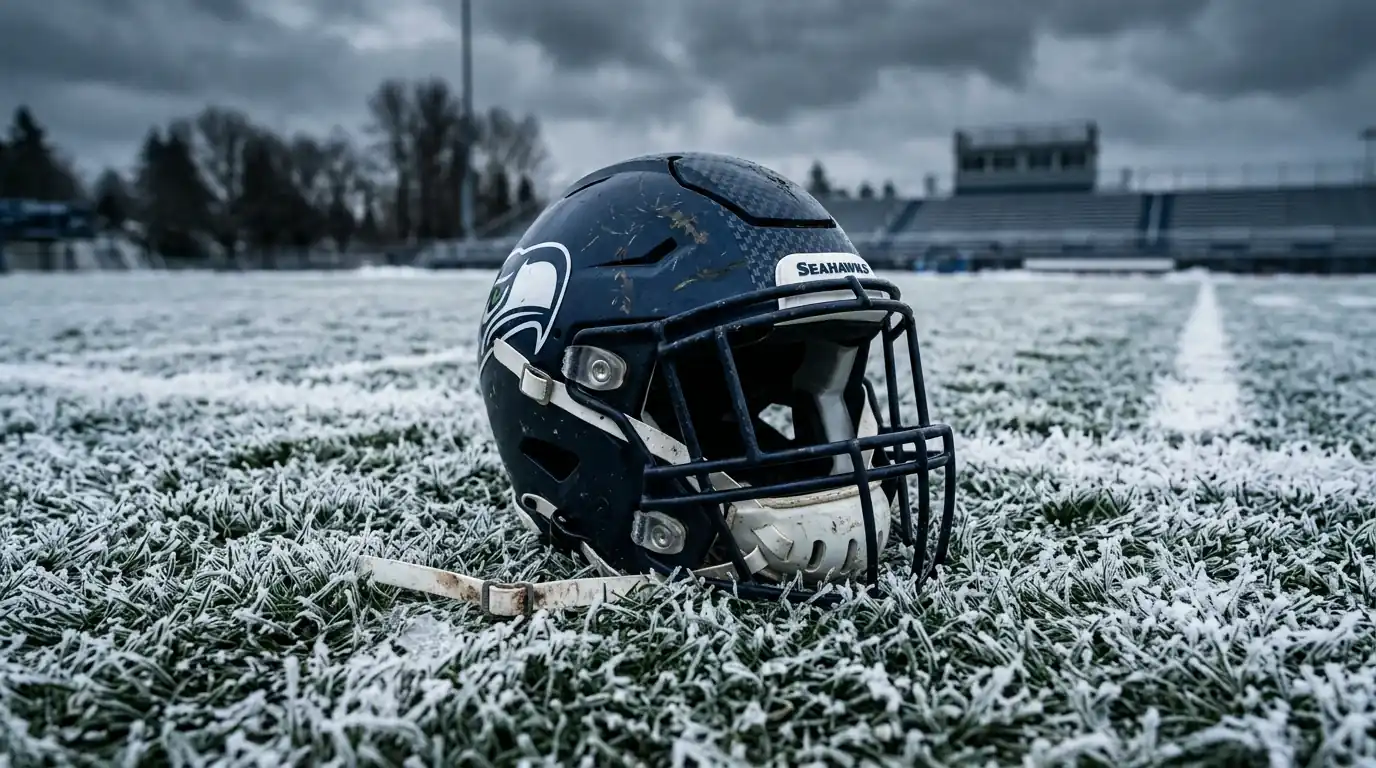
Below 25 degrees, the decline accelerates. Passing efficiency drops by 10-15% at sub-freezing temperatures, which translates to three to five fewer points on a typical total. Quarterbacks report that the ball feels “like a rock” below 20 degrees — the leather contracts, the laces stiffen, and the grip surface loses its tackiness. Release velocity drops because the muscles in the hand and forearm are slower to fire in extreme cold, even with gloves. The result is wobbly intermediate throws, underthrown deep balls, and an elevated interception rate.
For my model, I use a three-tier temperature adjustment. Above 50 degrees Fahrenheit (10 degrees Celsius): no adjustment. Between 25 and 50 degrees (minus 4 to 10 Celsius): subtract one point from the total. Below 25 degrees (minus 4 Celsius): subtract three points. These are starting points, not final answers — they stack with wind and precipitation adjustments, and the specific teams involved matter enormously, which is where the next section comes in.
The Counter-Intuitive Cold Over
This is the data point that changed how I bet cold-weather games entirely. When the temperature drops below 0 degrees Celsius but there is no accompanying snow or significant wind, the over hits in 60% of cases. Sixty percent. In a sport where anything above 55% is an extraordinary edge, this number demanded investigation.
The finding comes from a decades-long dataset analysed by Chad Nagel of SportsBoom, and when I first encountered it, I assumed it was a sample-size artefact. So I pulled my own data. Cold, calm, dry games are genuinely rare — perhaps ten to fifteen per season — which makes the sample small. But the pattern held in my data too, and the mechanism makes sense once you think it through.
In cold games with wind or snow, scoring is suppressed by the combination of factors: the ball is harder to throw, harder to catch, and harder to kick, while the field surface is compromised and play-calling shifts toward the run. But strip away the wind and the snow, leaving only the cold, and something interesting happens. The passing game is impaired but not broken. Quarterbacks can still throw with reasonable accuracy because there is no lateral wind disrupting the ball flight. Receivers can still run precise routes because the field is not snow-covered. Kickers can still make field goals from normal range because the wind is not pushing the ball off line. The cold reduces efficiency but does not destroy it.
Meanwhile, sportsbooks have already shaded the total down by two to three points in response to the forecast. The market sees “14 degrees, Lambeau Field, December” and assumes a defensive battle. In a game with wind and snow, that assumption is correct. In a game with cold air and a calm, clear sky, the assumption overshoots. The total drops below fair value, and the over becomes the sharper play.
I want to be careful here: this is not a blind-over system. The 60% hit rate is measured against closing lines, meaning the edge survives even after the market has had all week to adjust. But it requires the specific combination of sub-zero Celsius, low wind, and no precipitation. If any one of those conditions is absent — if the wind picks up or snow begins — the pattern collapses and the under resumes its dominance. I check the forecast obsessively on Saturdays for these games, because a forecast shift from “cold and calm” to “cold with 15 mph winds” inverts the entire thesis.
Practically, I handle these games as follows. On Wednesday, I flag any late-season game where the temperature forecast is below freezing and the wind forecast is under 10 mph sustained. On Friday, I recheck both variables. If the conditions hold, I note whether the total has already dropped from the opener — in most cases it has, by two to three points, because the market sees the temperature and assumes under. On Saturday night, I make the final call. If the wind is still forecasted under 10 mph and there is no precipitation in the outlook, I take the over. The market has overcorrected for temperature without accounting for the absence of the factors that actually suppress scoring. The bet is counter-intuitive, which is exactly why it works: most bettors cannot bring themselves to back the over when the temperature reads minus 8 Celsius.
Northern vs Southern Rosters: The Research
In 2025, a peer-reviewed study published in the journal Temperature by Taylor and Francis did something no one in the betting content space had done before: it quantified, with academic rigour, the relationship between game-day temperature and the performance of teams from northern versus southern states. The sample covered every NFL game from 2017 to 2025, cross-referenced with official NFL Gamebook data, and the results were striking.
Teams based above the 39th parallel — the latitude that roughly divides traditional “cold-weather” NFL cities from warmer ones — saw their win probability decline as game-day temperature increased. The odds ratio was 0.974 per degree, with a p-value of .026, meaning the finding was statistically significant at conventional thresholds. In plainer terms: for every degree warmer the game-day temperature, northern teams became slightly less likely to win. The effect was small per degree but compounded across the 40-to-60-degree swings between a December home game and a September road trip to Miami.
The reverse was equally telling. Point differential for northern teams playing at southern sites was significantly and negatively associated with rising temperature. The regression coefficient was minus 0.152 with a p-value of .001. Northern rosters — built for cold, practising in cold, conditioned to cold — measurably underperformed when temperature climbed. Southern rosters showed the opposite pattern: their performance degraded in cold-weather road games, though the effect size was slightly smaller.
What does this mean for bettors? It means the spread should account for climate mismatch, and in many cases it does not fully do so. When a team from Atlanta or Jacksonville or Las Vegas travels to Green Bay in December, the spread may reflect home-field advantage and recent form, but it rarely captures the physiological disadvantage of warm-climate players operating in sub-freezing conditions. Conversely, when Green Bay or Buffalo travels to Tampa in September, the heat effect is similarly underpriced.
I have started incorporating latitude-adjusted temperature differentials into my spread model. The adjustment is modest — typically half a point to a full point on the spread, depending on the temperature gap — but in a sport where games are routinely decided by three points, half a point matters. For UK bettors, this is an edge that requires no proprietary data and no expensive tools. You need a weather forecast, a list of NFL team locations by latitude, and the willingness to make a simple calculation. The academic literature has done the hard work; we just need to apply it.
A note on the dome team cold-weather road record: the north-south climate gap compounds with the indoor-outdoor adjustment. A dome team from the south travelling to a cold outdoor venue faces a double disadvantage — climate and facility. Those games deserve the steepest adjustment in the model.
Wind Chill vs Air Temperature
Every winter, the broadcast graphics flash a wind-chill reading that makes the conditions sound apocalyptic. “Air temperature 12 degrees, wind chill minus 5.” Viewers gasp. Bettors panic. And the line moves. But does wind chill actually belong in your model, or is air temperature sufficient?
The honest answer is that wind chill matters for player comfort and injury risk but does not independently predict scoring beyond what air temperature and wind speed already capture individually. Wind chill is a calculated index that estimates how cold exposed skin feels in moving air. It affects the players’ experience of the game — cold hands, numb fingers, reduced dexterity — but those effects are already accounted for when you model air temperature and wind speed as separate inputs. Adding wind chill as a third variable creates multicollinearity: you are double-counting the wind.
My approach is to ignore wind chill entirely and model air temperature and sustained wind speed independently. If a game forecasts 15 degrees Fahrenheit with 20 mph winds, I subtract three points for the cold and two to three points for the wind. The combined adjustment of five to six points captures the reality of the conditions without needing to invoke the wind-chill index. If I used wind chill instead, I would risk over-adjusting because the “minus 5 wind chill” headline creates an emotional response disproportionate to the incremental statistical impact.
The one exception is extreme wind chill below minus 20 Fahrenheit, which occurs in perhaps one or two games per season. At that level, the physiological effects on the quarterback’s throwing hand — reduced nerve conduction velocity, slower muscle contraction — compound in ways that a linear temperature model does not fully capture. In those rare cases, I add an additional point of total suppression beyond what the individual temperature and wind adjustments would suggest. But these games are so infrequent that they are curiosities rather than a systematic betting angle.
Freezing and the Kicking Game
Cold air is denser than warm air. Denser air creates more drag on the football. More drag means shorter field goals. The physics is simple; the betting implications are less so.
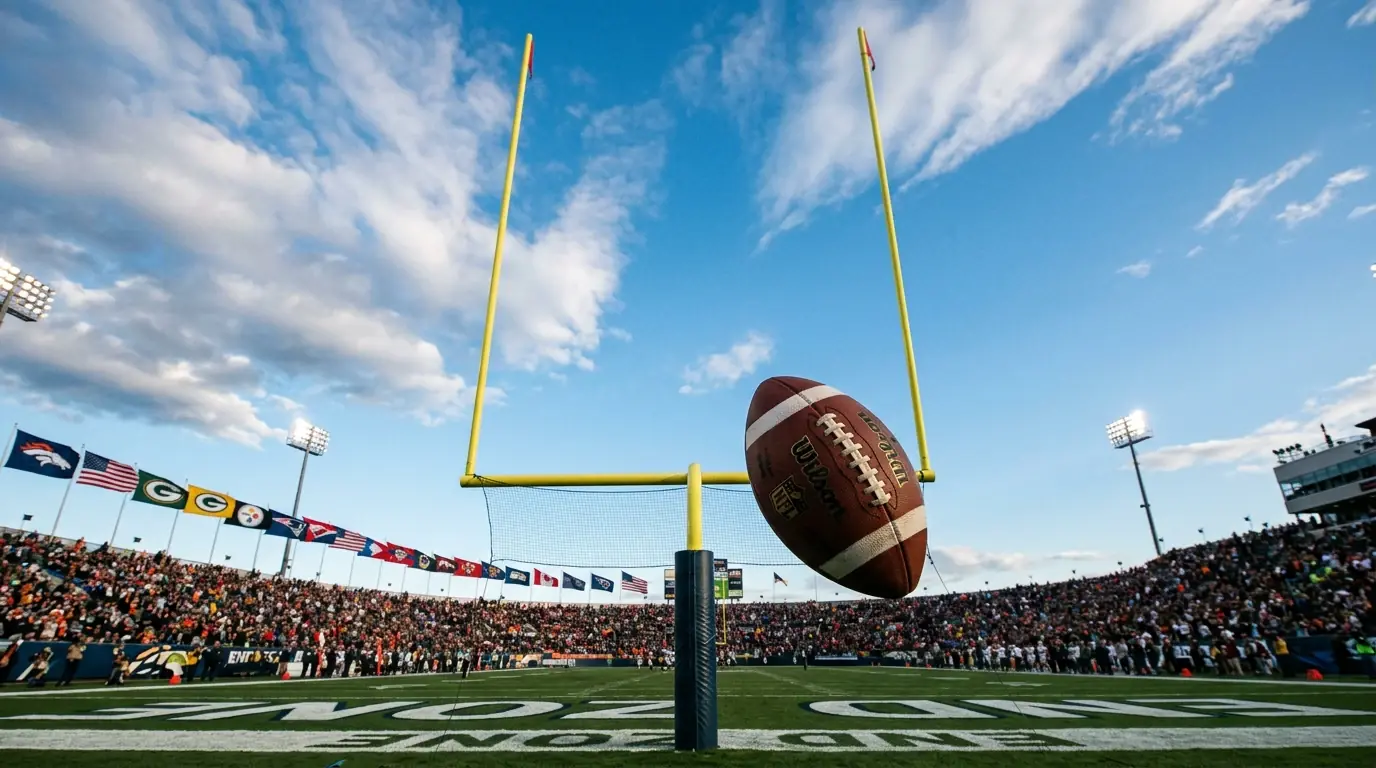
A field goal attempt that clears the crossbar by two yards in 55-degree air might fall a yard short in 15-degree air, all else being equal. The difference is not dramatic on short kicks — a 25-yarder clears in almost any temperature — but it stacks with distance. Beyond 45 yards, the cold-air penalty begins to matter. Kickers in sub-freezing games historically show reduced accuracy at range, and coaches adjust accordingly: they attempt fewer long field goals and are quicker to punt from the opponent’s 35-yard line.
The ball itself becomes less cooperative in extreme cold. NFL game balls are inflated to 12.5-13.5 PSI in the officials’ locker room, which is heated. When the ball hits the field at 10 degrees Fahrenheit, the air inside contracts and the pressure drops by roughly 1 PSI. A slightly deflated ball is marginally easier to grip for the quarterback but slightly harder to kick cleanly because the surface is softer and the contact point is less predictable. This is a small effect, but it contributes to the overall kicking-game degradation in freezing conditions.
For totals purposes, the kicking-game penalty in cold games is roughly one fewer made field goal per team across the game. That translates to a two-to-three-point reduction in the total beyond what the passing-game suppression already accounts for. When I build a cold-weather total model, I layer three adjustments: passing efficiency decline (two to three points), kicking range reduction (two points), and — in sub-zero games — a small volatility add for unpredictable bounces and fumbled snaps on frozen turf. The layers stack to the five-to-eight-point total suppression that extreme cold games typically produce.
Injury Risk and Late-Season Volatility
A 2022 medRxiv preprint analysing more than 1,557 NFL matches across eight seasons found that concussion risk increases in the second half of the season and correlates with colder game-day temperatures. The study controlled for the obvious confounders — cumulative hits, roster fatigue, schedule intensity — and still found a meaningful signal from weather.
The mechanism is plausible. Cold muscles are less pliable, which makes them worse at absorbing impact. Cold reduces blood flow to peripheral tissues, slowing the body’s protective reflexes. A player taking a helmet-to-helmet hit at 60 degrees has marginally more muscular protection than the same player taking the same hit at 15 degrees. Over a season’s worth of accumulated trauma, the cold-weather effect compounds with the general wear of the schedule.
For bettors, the injury angle introduces a volatility factor in late-season cold-weather games. If a star quarterback or key skill-position player exits due to concussion in the second half, the game script shifts dramatically. This is not something you can predict or model in advance, but it is something you should price into your risk assessment. Late-season cold games carry higher variance than their early-season equivalents, which means the total is less predictable and position-betting confidence should be lower.
I do not bet player props in late-season cold-weather games with the same sizing I use in September. The injury risk is not quantifiable enough to generate a directional edge, but it is real enough to warrant reducing exposure. If I have a model edge of two points on the total, I bet it at full size in mild weather and at 60-70% size in a December cold game. That is not a precise formula — it is a heuristic for acknowledging that cold-weather games introduce a wildcard that my model cannot fully capture.
This is also a domain where ethical caution matters. Injury-related prop markets — particularly those that implicitly profit from in-game exits — sit in a grey zone that responsible bettors should navigate carefully. I steer clear of first-half player exit props entirely. The information advantage is nil, and the ethical discomfort is not worth the marginal expected value.
Frequently Asked Questions
Is the ‘over in cold games’ pattern statistically robust enough to bet on?
The 60% over rate in sub-zero Celsius games without wind or snow is measured across decades of data and holds against closing lines. However, the sample size per season is small — roughly ten to fifteen qualifying games — so the variance around that 60% figure is wide. I treat it as a genuine edge worth acting on, but I size my bets modestly and never chase it if the forecast shifts to include wind or snow.
Do northern-roster teams actually struggle when travelling to warm-weather sites?
Yes. A 2025 peer-reviewed study in the journal Temperature found that teams based above the 39th parallel saw their win probability decline as game-day temperature increased, with an odds ratio of 0.974 per degree. The point differential for northern teams at southern sites was significantly negative as temperatures rose. The effect is small per degree but compounds over a 40-to-60-degree swing.
Does wind chill belong in a bettor’s model, or is air temperature enough?
Air temperature and wind speed modelled as separate inputs are sufficient. Wind chill is a composite index that double-counts wind if you are already adjusting for it independently. I ignore wind chill entirely in my model and adjust for air temperature and sustained wind speed individually, which avoids over-correcting the total based on a headline number designed for skin-exposure risk rather than football performance.
Prepared by the Weather Impact on nfl Betting editorial staff.