NFL Field Goal Snow Accuracy and Winter Kicking Markets
 Available in US
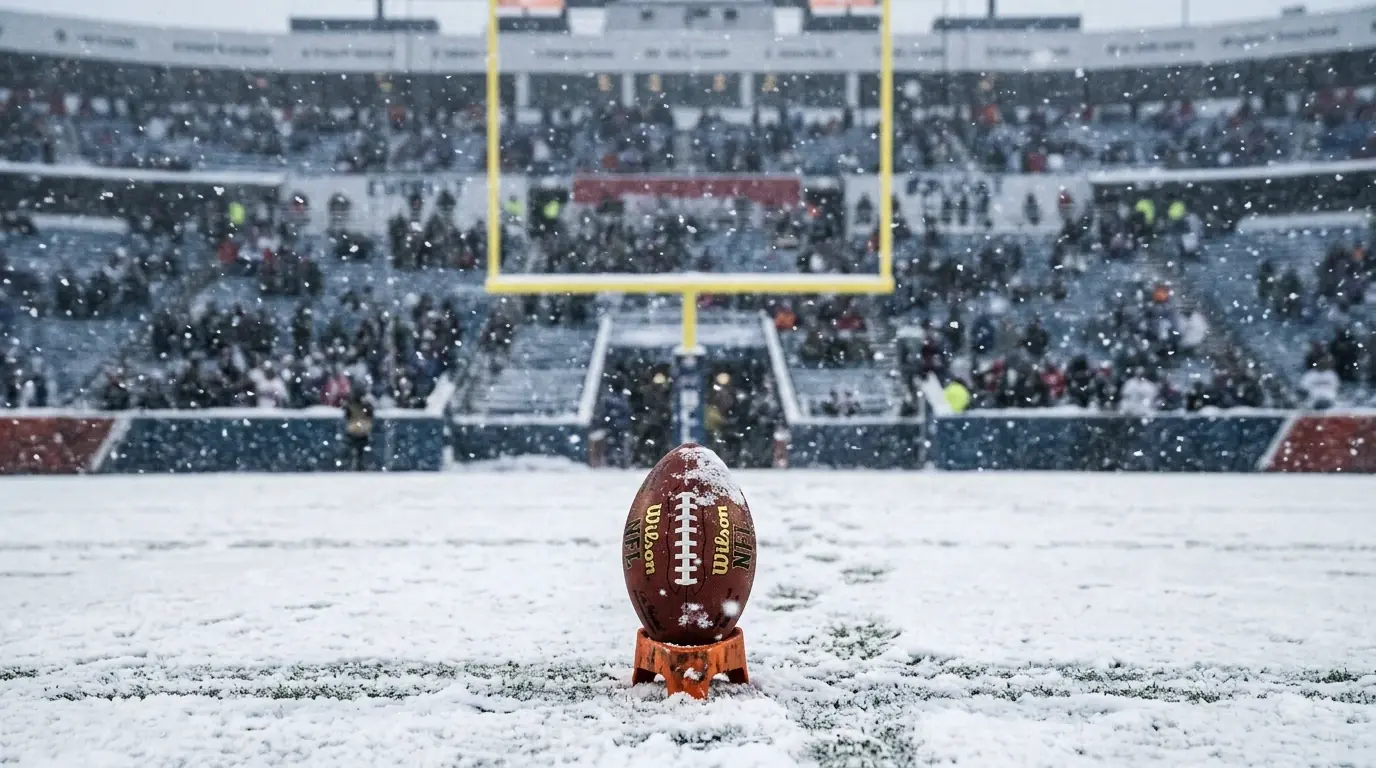
I once watched a kicker miss three consecutive field goals in a single snow game — two from inside 40 yards. The total had already moved down 3.5 points on the weather, and it still was not enough. That afternoon drove home a point that took me years to fully appreciate: snow does not just reduce scoring generally. It attacks the kicking game with disproportionate force, and the betting market rarely prices that specific damage accurately.
The league-wide field goal conversion rate in the NFL sits at approximately 83 percent across all conditions. In snow, that number drops to 76 percent — a seven-point decline that might sound incremental until you calculate what it means over the course of a game with four or five field goal attempts between the two teams.
Field Goal Conversion Rates and Statistics in Heavy Snow
Seven percentage points of lost accuracy sounds abstract, so let me make it concrete. In a typical NFL game, the two teams combine for roughly three to four field goal attempts. At 83 percent conversion, you would expect approximately 2.5 to 3.3 of those to convert. At 76 percent, the expected conversions drop to 2.3 to 3.0 — roughly one fewer successful field goal every two or three snow games. Each missed field goal removes 3 points from the combined score, so the kicking-game penalty alone accounts for about 1 to 1.5 points off the total per snow game on average.
That might seem small, but NFL totals are often decided by a single point. A closing total of 41.5 in a snow game might land at 40 or 41 once you strip out the kicking degradation — and that is before you account for any passing-game suppression. The two effects compound, which is why heavy snow games tend to go under at rates well above the baseline 50 percent.
The 76 percent figure comes from historical data aggregated by Sharp Football Analysis, covering games where snow was actively falling during play rather than games where snow was simply on the ground from prior days. The distinction matters. A cleared field with a dry surface and cold air does not produce the same kicking problems as active snowfall, which obscures field markings, creates uneven footing on the plant step, and changes the ball’s aerodynamic profile as it passes through falling precipitation.
Distance Buckets in Snow
Not all field goals are equally vulnerable to snow. The degradation is distance-dependent, and understanding which buckets suffer most is essential for kicker prop betting and for modelling team totals.
Short field goals — inside 30 yards — remain reasonably reliable in snow. The kicker’s margin for error on a 25-yard attempt is large enough that even with compromised footing and reduced visibility, the conversion rate stays above 90 percent. These are the “chip shots” that coaches still attempt confidently in heavy weather, and they rarely decide the over-under outcome.
The 30-to-39-yard range is where the first significant drop appears. In clear conditions, NFL kickers convert at roughly 87 to 90 percent from this range. In snow, my tracking shows that figure falling to the low 80s — a meaningful but not dramatic decline. The plant foot is the primary issue: snow-covered turf offers less grip, and a slight slide during the plant step can push the kick offline by several degrees.
Beyond 40 yards, the picture changes substantially. The league average for 40-to-49-yard attempts is around 78 percent in normal weather. In heavy snow, that drops into the mid-60s. The ball flight is long enough that falling snow creates genuine aerodynamic interference, and the kicker needs maximum power — which requires maximum stability from a plant step that the surface can no longer guarantee. At 50 yards and beyond, snow-game attempts become near coin flips, and smart coaching staffs avoid them entirely.
The practical implication: in a snow game, expect fewer long field goal attempts overall. Coaches will go for it on fourth down from the 30 to 35-yard line rather than sending a kicker out for a 48-yarder in deteriorating conditions. This shifts the scoring distribution — some of those fourth-down conversions result in touchdowns that would otherwise have been field goals, partially offsetting the kicking penalty.
Kicker Prop Bets in Snow
Two winters ago I started tracking kicker prop markets in weather-affected games, and the results have been illuminating. UK sportsbooks typically offer lines on kicker total points scored (counting field goals at 3 and extra points at 1), and these lines adjust less aggressively for weather than game totals do.
In a standard game, a kicker’s total points prop might sit at 7.5 or 8.5 — reflecting two field goals and two extra points as a baseline. In a confirmed snow game, I have seen that line move down by only 1 to 1.5 points, to 6.5 or 7.5. Given that the 76-percent conversion rate and the reduction in long field goal attempts together suggest a genuine decrease of 2 to 3 expected points, the under on kicker props looks systematically underpriced in snow games.
The extra-point component is also worth noting. The NFL moved the extra-point distance to 33 yards in 2015, and that longer distance becomes relevant in snow. Extra-point conversion has dipped below 90 percent in heavy weather in some seasons, adding another small penalty that kicker prop lines rarely capture.
Going for It on Fourth Instead
The NFL’s broader trend toward aggressive fourth-down decision-making accelerates in snow. Analytics-driven coaching staffs already go for it on fourth down more often than their predecessors; add a snow-covered field and reduced kicking reliability, and the threshold shifts further. In my database of heavy-snow games since 2015, teams attempted fourth-down conversions at roughly 1.4 times the rate they did in clear-weather games from the same field positions.
This creates a secondary effect that complicates the simple “snow equals under” narrative. A fourth-down conversion from the opponent’s 33-yard line can lead to a touchdown rather than a field goal attempt. The points do not vanish — they redistribute. Instead of 3 points from a field goal, the team scores 7 from a touchdown, or 0 from a failed conversion. The variance increases. Snow games produce more extreme outcomes: either a team punches it in for seven or walks away with nothing, rather than settling for three.
For total bettors, this means snow games are higher-variance propositions than the aggregate data suggests. The mean score drops, but the distribution around that mean widens. If you are betting the under at a number the market has already adjusted downward by 3 to 4 points, you are betting into a wider outcome range, and the probability of landing exactly on or near the total increases. That is not a reason to avoid the under — it is a reason to size the bet appropriately and recognise that kicker accuracy in adverse conditions is only one piece of a more complex puzzle.
Reading the Kicking Forecast Before Kickoff
My pre-game routine for snow games always includes two specific checks. First, I look at the snowfall rate forecast — is it light flurries or heavy accumulation? The 76 percent figure is an average across all snow intensities, and light dustings barely move the needle. Second, I check whether the field has been treated with a tarp during warm-ups. A tarped field that is uncovered just before kickoff provides a clean surface for at least the first quarter, which means kicker accuracy in the early going may be near-normal, with degradation building as the game progresses and snow accumulates. Both of these details matter far more than the simple binary “snow or no snow” that most bettors use to make their decisions.
Are short-distance field goals really safe in heavy snow?
Inside 30 yards, conversion rates remain above 90 percent even in snow. The kicker’s margin for error is large enough that compromised footing rarely costs the attempt. The significant accuracy drops begin at the 30-to-39-yard range and become severe beyond 40 yards, where snow-game conversion falls into the mid-60s.
Should I fade kicker total points props in snow games?
Yes, as a default lean. Kicker prop lines in snow games typically move down by only 1 to 1.5 points, while the actual expected reduction in kicker scoring is closer to 2 to 3 points. The under on kicker props has been consistently underpriced in heavy-snow games across recent seasons.
Published by the Weather Impact on nfl Betting team.