NFL and the UK Gambling Commission: Rules a British Bettor Should Know
 Available in US
The UK sports betting market generates £16.8 billion in gross gaming yield annually, with roughly 290 million online bets placed each month. Those numbers, drawn from the Gambling Commission’s own reporting, describe one of the most regulated betting environments on earth — and every NFL wager placed by a British bettor operates within that framework, whether the bettor realises it or not.
This article is not a legal guide. It is a practical walkthrough of the regulatory landscape that shapes how, where, and under what conditions a UK resident can bet on American football. From licensed operators to void rules on postponed games, the Gambling Commission’s framework has direct implications for weather-driven NFL bettors who need to understand what happens to their money when the unexpected occurs.
Licensed vs Grey-Market Books
Every sportsbook that legally accepts bets from UK residents must hold a licence from the Gambling Commission. This is not optional and it is not a formality. The licence requirement is backed by the Gambling Act 2005 (amended 2014) and means that the operator is subject to UK consumer protection standards, including transparent terms and conditions, segregated customer funds, and dispute resolution through an approved Alternative Dispute Resolution provider.
For NFL bettors, the practical difference between a licensed and an unlicensed book is significant. Licensed operators — Bet365, William Hill, Paddy Power, Sky Bet, Betfair, and dozens of others — must honour their published terms on void bets, postponed games, and settlement procedures. If a game is postponed due to weather and your bet is voided, the licensed operator must return your stake under its published rules. An unlicensed offshore book has no such obligation under UK law.
The grey market consists of operators that are licensed in other jurisdictions (Curaçao, Malta Gaming Authority for non-UK customers, Isle of Man) but do not hold a Gambling Commission licence. These books are not illegal for UK residents to use — the Gambling Act criminalises the provision of unlicensed gambling services, not the consumption of them — but they offer no UK regulatory protection. If your weather-driven bet is settled incorrectly by a grey-market operator, you have no recourse through the Gambling Commission’s complaint process.
My recommendation is straightforward: use only Gambling Commission-licensed operators for NFL betting. The prop-market depth at major UK-licensed books has improved dramatically over the past three seasons, and the pricing on NFL totals and spreads is competitive with American sharp books for most games. The regulatory protection is worth the marginal difference in odds.
Void Rules for Postponed Games
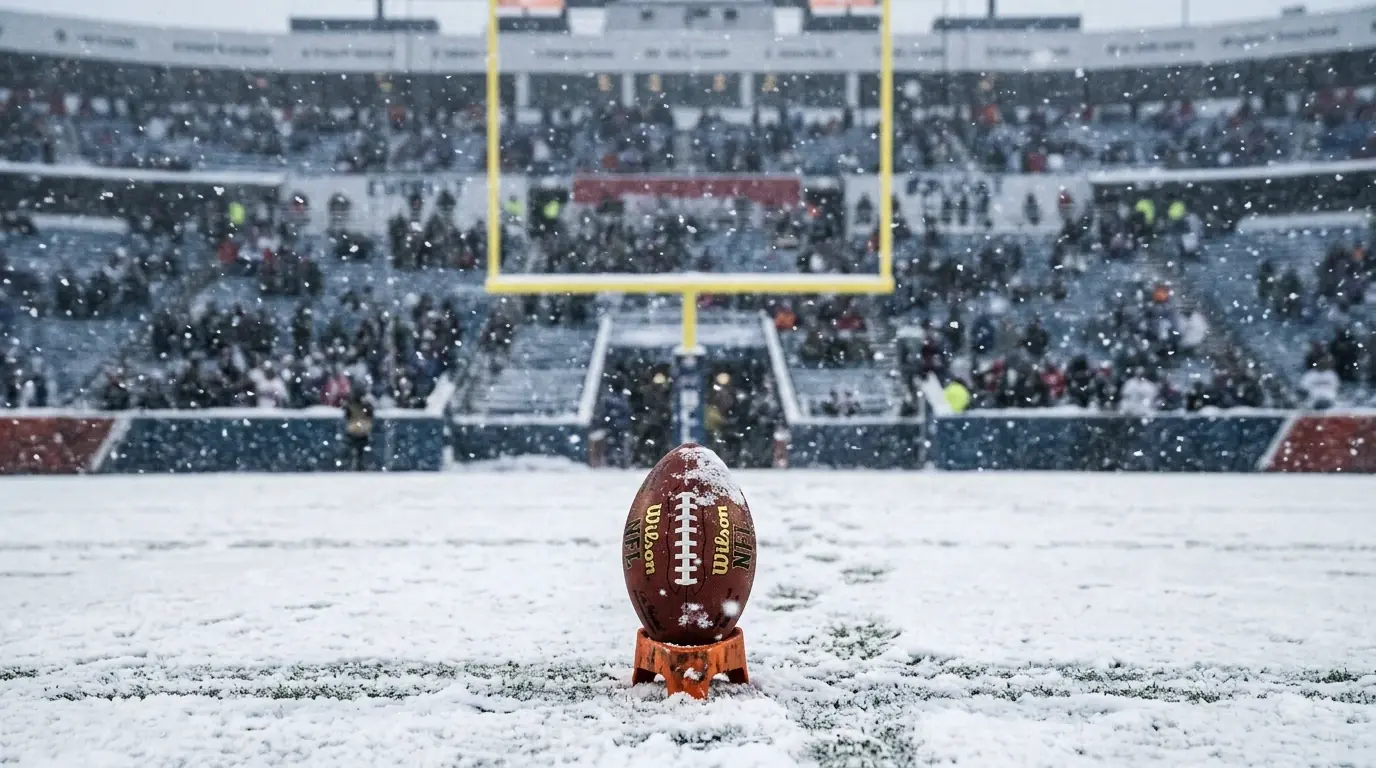
Weather-driven NFL bettors need to understand void rules because weather is the most common cause of NFL game disruptions. The NFL’s own rules require retractable-roof stadiums to keep the roof open unless conditions breach specific thresholds: active precipitation or lightning, temperature below 40 degrees Fahrenheit (4 degrees Celsius), or wind gusts above 40 mph. The decision is made approximately 90 minutes before kickoff.
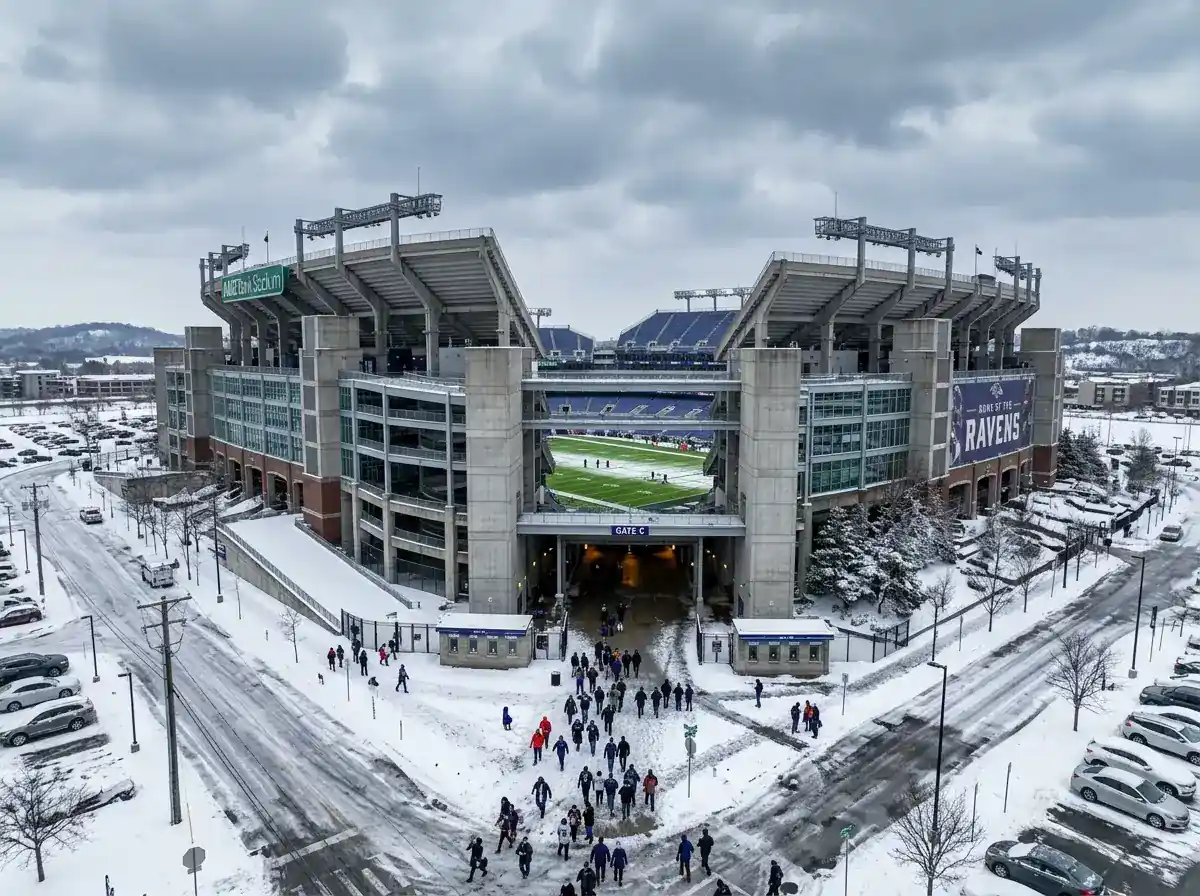
If a game is postponed — moved to a different date — most UK-licensed sportsbooks will void all pre-match bets and return stakes. The specific terms vary by operator, but the standard threshold is 24 to 48 hours: if the game is replayed within that window, bets may stand; if it is postponed beyond that window, bets are voided. The 2022 Buffalo blizzard that delayed a Bills game is the most recent high-profile example of weather causing a postponement that triggered void rules across UK platforms.
If a game starts but is suspended due to weather (lightning delays are the most common cause), bets generally stand as long as the game is completed within the same calendar day or, at some operators, within 24 hours. A game that is abandoned and declared official after reaching the minimum required playing time (typically the completion of the third quarter) will be settled on the score at the point of abandonment.
For weather bettors, the key risk is placing a bet on a game that you expect to be played in adverse conditions only to have it postponed before kickoff. Your bet is returned with no profit and no loss, but you have tied up bankroll for days waiting for a settlement that produces nothing. I maintain a secondary list of games where postponement risk is non-trivial (primarily late-season games in snow-belt cities) and factor that risk into my bankroll allocation.
Affordability and Deposit Limits
Since 2020, UK-licensed operators have been subject to increasingly strict affordability checks. These checks are designed to ensure that customers are not gambling beyond their means, and they are triggered by deposit thresholds, loss thresholds, or betting patterns that the operator’s risk team flags as potentially problematic.
For NFL weather bettors who place concentrated bets on a small number of games per week, affordability checks can be triggered by the pattern of activity rather than the absolute amounts. A bettor who deposits modestly but places large individual stakes on weather-flagged totals may attract attention more quickly than a bettor who spreads smaller stakes across a wider range of markets. The check itself typically involves a request for documentation — proof of income, bank statements, or a brief questionnaire about your financial circumstances.
The checks are a feature of the UK regulatory environment, not a bug. They exist to protect vulnerable customers, and most bettors who can demonstrate that their gambling is affordable will pass the check with minimal friction. However, the timing can be inconvenient: if a check is triggered on a Saturday evening, hours before you plan to place a weather-driven NFL bet, the delay in verification may cause you to miss the optimal line.
My approach: maintain verification documentation in advance. If you know your operator is likely to conduct an affordability check (most do after net losses exceed £2,000 in a rolling 12-month period, though thresholds vary), have the necessary documents ready to upload immediately rather than scrambling on game day.
Self-Exclusion and GAMSTOP
GAMSTOP is the UK’s national self-exclusion scheme. A bettor who registers with GAMSTOP is barred from all Gambling Commission-licensed online operators for a minimum of six months, with options for one-year and five-year exclusions. The registration applies across all licensed platforms simultaneously — you cannot self-exclude from one operator while continuing to bet with another.
For the NFL weather betting community, GAMSTOP is relevant as a responsible gambling tool. Weather betting can feel uniquely compelling because the analytical framework creates a sense of certainty that may not always be warranted. A bettor who finds that weather analysis has become a justification for excessive wagering rather than a disciplined edge should consider GAMSTOP as a circuit breaker.
One common question is whether GAMSTOP blocks access to offshore or grey-market operators. It does not. GAMSTOP applies only to Gambling Commission-licensed platforms. An excluded bettor who is determined to continue wagering can technically do so through unlicensed offshore books, though doing so forfeits all UK regulatory protections. The scheme is a voluntary commitment, not a technological barrier, and its effectiveness depends on the bettor’s willingness to honour the exclusion.
Regulation as a Backdrop to Your Betting
The Gambling Commission’s framework is not something most NFL bettors think about until something goes wrong — a voided bet, an affordability check, or a dispute over settlement terms. Understanding the rules in advance eliminates those surprises and ensures that your weather-driven approach operates on solid regulatory ground. Use licensed operators. Know the void rules. Keep verification documents ready. And treat GAMSTOP as a tool that exists for good reason, even if you never need it. The regulatory environment is part of the infrastructure you bet within, and treating it as an afterthought is a risk that no serious bettor should take.
Is my bet voided if the roof state changes mid-game?
No. A change in roof state (open to closed or vice versa) during a game does not void bets at any major UK-licensed sportsbook. Bets are settled on the final result regardless of whether the roof was open or closed. Void rules apply only to postponements, abandonments, or venue changes — not to in-game environmental changes.
Does GAMSTOP block US offshore books too?
No. GAMSTOP applies exclusively to operators licensed by the UK Gambling Commission. Offshore books licensed in other jurisdictions (Curaçao, Costa Rica, etc.) are not part of the GAMSTOP scheme. However, using unlicensed operators means forfeiting all UK consumer protections, including dispute resolution and fund segregation.
Written by the editors at Weather Impact on nfl Betting.