NFL Historic Bad Weather Cities Baseline: Cleveland, Buffalo, Pittsburgh, Foxborough
 Available in US
Ed Salmons, the VP of Risk Management at the Westgate SuperBook, has described a phenomenon that every experienced NFL bettor recognises: games in bad-weather cities like Cleveland, Buffalo, Pittsburgh, and Foxborough “will always come out a little bit lower when you get past Thanksgiving just in case the weather is crappy.” That “just in case” is the key phrase. It describes a baseline adjustment that sportsbooks apply to late-season games in historically cold and stormy cities regardless of the actual game-day forecast — a structural pricing pattern that creates both opportunities and traps for weather bettors.
This article examines the bad-weather city baseline: what it is, when it kicks in, how it differs from city to city, and how to determine whether the market’s pre-emptive adjustment is accurate, overdone, or insufficient.
The Thanksgiving Pivot and Totals Drop
The NFL’s bad-weather pricing pivot happens around Thanksgiving, roughly Week 12 of the regular season. Before that point, totals for games in northern outdoor stadiums are set primarily on team strength, offensive and defensive efficiency, and pace of play. After Thanksgiving, sportsbooks begin applying a weather-risk discount to games in cities with historically severe late-season conditions — even when the forecast for a specific game is relatively mild.
Kevin Roth, the sports weather expert at RotoGrinders, described the dynamic vividly during a 2022 winter storm: totals “opened and fell off a cliff.” His observation captures the market’s tendency to react sharply to weather events in bad-weather cities, but the baseline adjustment that Salmons describes is subtler — it is baked into the opening line from the moment the schedule reaches late November, regardless of whether a storm is forecast.
The baseline discount is typically 1 to 2.5 points on the total, depending on the city and the week of the season. A game between two average offences that would be posted at 44.5 in a dome in Week 12 might open at 42.5 or 43 in Buffalo or Cleveland during the same week, purely on the basis of the venue’s historical weather profile. That discount widens as the season progresses: by Week 16, the same matchup in the same city might open at 41 or 41.5.
For weather bettors, the Thanksgiving pivot creates a strategic inflection point. Before the pivot, the market tends to underprice weather risk in northern cities because the baseline adjustment has not yet been applied. After the pivot, the market may overprice weather risk in games where the actual forecast is milder than the historical average for that city and week. The value flips: early-season weather edges lean toward the under; late-season edges increasingly lean toward the over when the forecast contradicts the baseline expectation.
Cleveland and the Lake Effect
Cleveland’s Huntington Bank Field sits on the shore of Lake Erie, exposed to the lake-effect weather patterns that define northern Ohio’s winter climate. Lake-effect snow occurs when cold Arctic air passes over the relatively warm lake surface, picking up moisture and depositing heavy, localised snowfall on the downwind shore. Cleveland sits squarely in the lake-effect snow belt, and its stadium’s lakeside location maximises exposure.
The lake-effect dynamic makes Cleveland’s weather profile unusually volatile. A game in Week 14 might be played at 35 degrees Fahrenheit under clear skies, or it might be played during a lake-effect snow event that deposits two inches per hour on the playing surface. The difference between these scenarios is enormous for totals bettors, but the baseline adjustment applied by sportsbooks is a single number that represents the average expectation — not the specific forecast.
This volatility creates opportunity. When the forecast for a Cleveland game calls for clear conditions despite the late-season date, the baseline discount is still embedded in the line, and the over may offer value. Conversely, when a genuine lake-effect event is forecast, the market may not adjust aggressively enough beyond the baseline, and the under may be mispriced even after the initial line drop.
I track Cleveland games separately from other bad-weather cities because the lake-effect variable introduces a level of forecast uncertainty that does not exist elsewhere. Buffalo shares the lake-effect exposure, but Cleveland’s stadium orientation and proximity to the shore make the effect more pronounced and less predictable. My Cleveland-specific adjustment accounts for the lake-effect probability on game day, sourced from NOAA’s Great Lakes forecast models, and I apply it on top of the baseline discount rather than replacing it.
Buffalo and the Snow Belt Pattern
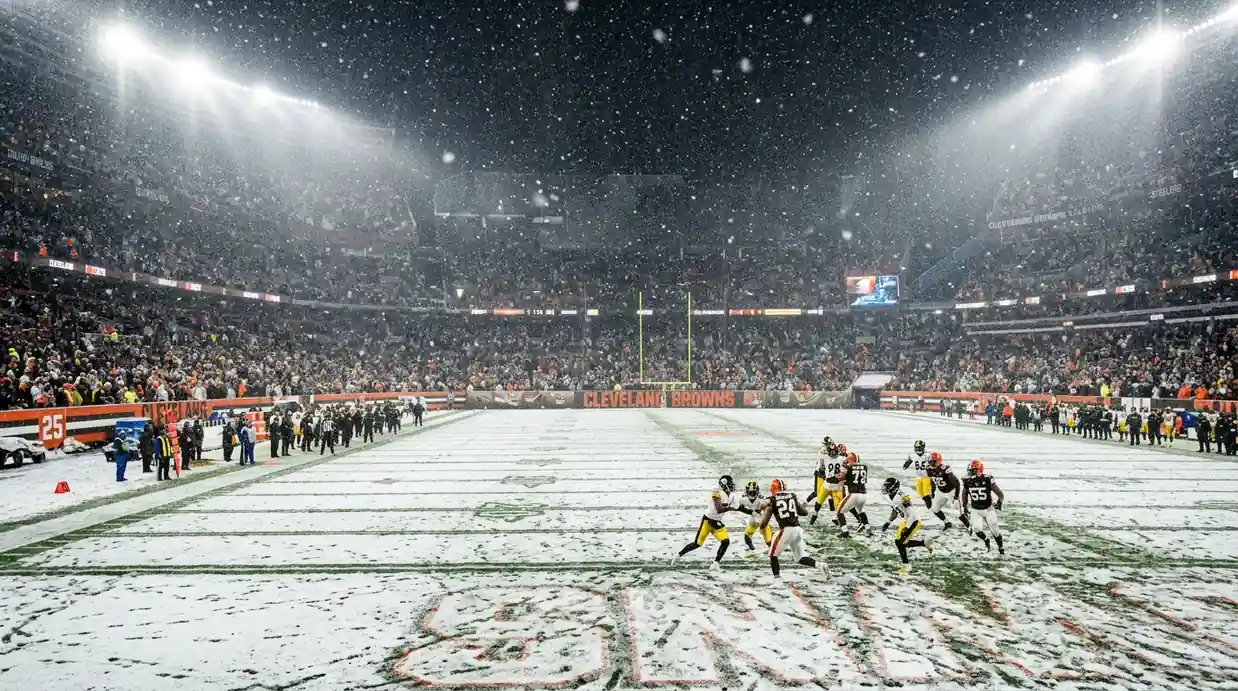
Buffalo’s Highmark Stadium is the NFL’s most weather-exposed venue. Its location in Orchard Park, south of the city, places it directly in the path of lake-effect snow bands that roll off Lake Erie. The stadium’s open design offers no wind protection, and the playing surface is natural grass — a combination that produces some of the most visually dramatic weather games in NFL history.
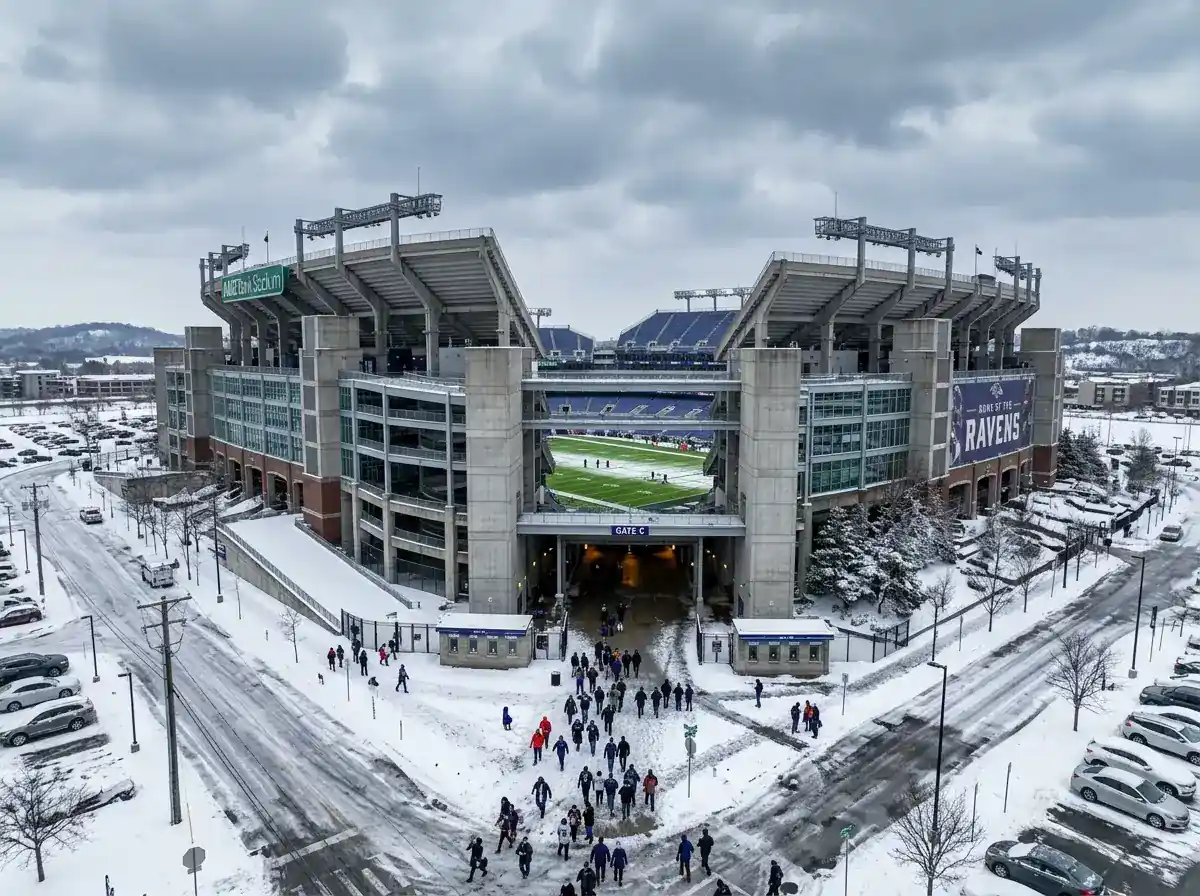
The 2022 Christmas weekend blizzard that forced the postponement of a Bills home game is the most extreme recent example, but Buffalo produces significant weather games with far greater regularity than any other NFL city. Snow accumulations of one to three inches during a game are common from late November through January, and the effect on scoring is consistently large: Buffalo late-season games average 3 to 5 fewer combined points than the same teams produce in neutral-weather conditions.
The market knows this. Buffalo is the city where the bad-weather baseline is most aggressively applied, and by Week 14, the totals discount at Highmark is typically 2 to 3 points relative to a dome equivalent. The question for bettors is whether this aggressive baseline is sufficient or excessive. In my tracking, the baseline at Buffalo is approximately correct on average — the market has learned to price Buffalo weather accurately in aggregate — but individual games still offer value when the specific forecast deviates from the baseline expectation.
The pattern I look for in Buffalo is the “false alarm” game: a late-season fixture where the baseline discount is applied but the actual forecast calls for mild, dry conditions. Buffalo does experience occasional mild December days — temperatures in the upper 30s or low 40s Fahrenheit, no precipitation, light wind — and when that happens, the total may be underpriced by 2 or more points because the baseline discount assumes worse conditions than the forecast delivers. These games do not occur every season, but when they appear, the over is a strong play.
Pittsburgh and Foxborough Comparisons
Pittsburgh and Foxborough are bad-weather cities with important distinctions from the lake-effect venues in Cleveland and Buffalo. Pittsburgh’s Acrisure Stadium sits at the confluence of the Allegheny and Monongahela rivers, protected from the worst lake-effect patterns by distance and terrain. Pittsburgh winters are cold and damp but produce less snow and less wind than the Great Lakes stadiums. The bad-weather baseline at Pittsburgh is correspondingly smaller — typically 1 to 1.5 points of discount versus the 2 to 3 points applied to Buffalo.
Foxborough’s Gillette Stadium in suburban Boston faces New England winter weather: cold temperatures, moderate snow, and occasional nor’easters. The stadium’s location 30 miles south of Boston puts it outside the worst coastal storm tracks, but it is still fully exposed to cold and wind. The Patriots’ decades of success under Bill Belichick in late-season home games created a perception that Foxborough was more weather-hostile than the data supports — much of the Belichick-era home dominance was attributable to roster superiority rather than weather effects.
For bettors, Pittsburgh and Foxborough represent the middle tier of bad-weather city analysis. The baseline adjustments are smaller than at Buffalo and Cleveland, the weather is more predictable (less lake-effect volatility), and the gap between baseline expectation and actual game-day conditions is narrower. The edges are consequently smaller, and I place fewer weather-driven bets on Pittsburgh and Foxborough games than on Cleveland and Buffalo fixtures.
The exception is the genuine nor’easter. When a major winter storm tracks directly through the Boston area on a Sunday in December, the effect on a Foxborough game is comparable to a lake-effect event in Buffalo — heavy snow, strong wind, severely degraded passing conditions. These events are rare (perhaps once every three or four seasons during game hours), but when they occur, the market often underprices their impact because the Foxborough baseline is set for ordinary cold rather than storm conditions.
Reading the Baseline Before You Bet Against It
The bad-weather city baseline is a real and persistent pricing feature. Sportsbooks apply it because it works — on average, late-season games in Cleveland, Buffalo, Pittsburgh, and Foxborough produce lower totals than equivalent matchups in neutral or indoor venues. The edge for weather bettors is not in discovering that the baseline exists but in identifying the specific games where the baseline is miscalibrated: too aggressive when the forecast is mild, or too conservative when a genuine weather event exceeds expectations. That requires tracking the forecast against the baseline week by week, city by city, and treating each game as a unique event rather than a representative sample of its city’s historical average.
When does the bad-weather city baseline kick in each season?
The baseline adjustment typically begins around Thanksgiving (Week 12) and deepens through the rest of the regular season and playoffs. Before Week 12, totals in northern outdoor stadiums are set primarily on team efficiency and pace. After Week 12, sportsbooks apply a 1 to 3 point discount depending on the venue’s historical weather profile. The adjustment is largest at Buffalo and Cleveland and smallest at Pittsburgh.
Is the effect priced in by Week 12 or only by Week 16?
The effect is partially priced in from Week 12 but continues to deepen through Week 16 and beyond. By Week 16, the baseline discount at Buffalo and Cleveland is at its maximum (typically 2.5 to 3 points). The value for bettors shifts across this window: early in the bad-weather window, overs in mild-forecast games tend to offer value; later in the window, the market has had more time to calibrate, and edges are smaller unless the forecast significantly deviates from the baseline expectation.
Prepared by the Weather Impact on nfl Betting editorial staff.