NFL Retractable Roof Rules and Betting Impact Before Kickoff
 Available in US
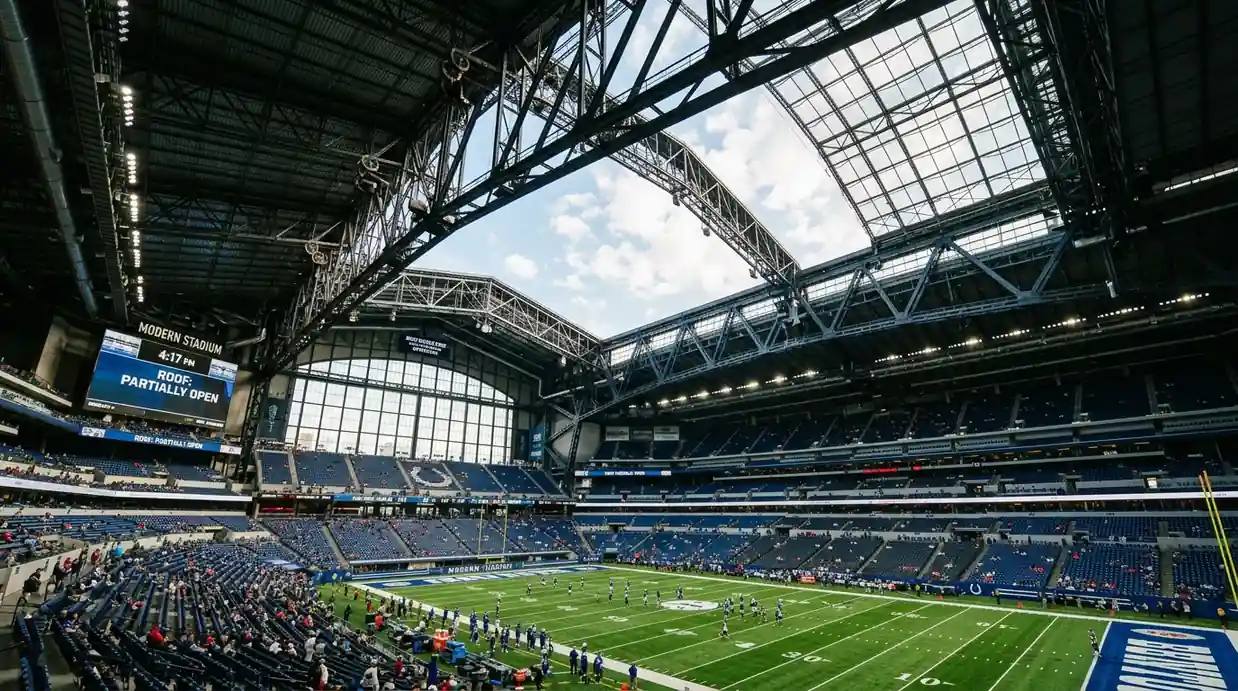
There is a peculiar moment in NFL betting that most UK bettors never witness: the 90-minute window before kickoff when a stadium operations team decides whether to open or close a retractable roof. I have watched it move a total by a full point in under ten minutes. If you are not paying attention during that window, you are placing a bet on a game whose conditions you do not fully understand.
Five NFL stadiums have retractable roofs, and each one creates a binary uncertainty that persists until roughly 90 minutes before the ball is kicked. The decision turns the venue from an indoor environment into an outdoor one — or vice versa — and with it, the weather calculus for the game changes entirely.
Pre-Kickoff Roof Decisions and Their Effect on Game Totals
NFL rules require that the retractable roof decision be made no later than 90 minutes before kickoff. The criteria are specific: the roof stays open unless there are active or imminent precipitation and lightning, the air temperature is below 40 degrees Fahrenheit (4 degrees Celsius), or wind gusts exceed 40 mph. If none of those conditions are met, the default is open.
This timeline creates a structured information advantage for bettors who monitor it. Most sportsbooks set their lines based on the expected roof state — if the weather forecast suggests the roof will close, the total reflects indoor conditions. But forecasts can shift in the final hours before a game, and a roof that was expected to close might stay open if the predicted rain arrives two hours late, or a roof expected to remain open might close if an unexpected temperature drop occurs.
From a UK bettor’s perspective, the timing is worth mapping out. A 1:00 pm Eastern kickoff translates to 6:00 pm GMT. The roof decision at 11:30 am Eastern — 4:30 pm GMT — lands right in the pre-match window when many UK bettors are finalising their selections. If you are watching for the announcement, you can catch a line that has not yet adjusted. If you are not watching, you are betting blind on the game’s atmospheric conditions.
The roof state matters because indoor conditions produce higher-scoring games on average. No wind means the passing game operates at full efficiency. Controlled temperature means no grip or ball-handling penalties. A total set for an indoor game typically sits 2 to 4 points higher than the same matchup would warrant outdoors in marginal weather. When the roof state flips, the total should move by that margin — and it often does, but not always instantaneously.
The Five Retractable Stadiums
The five NFL venues with retractable roofs are AT&T Stadium (Dallas), Lucas Oil Stadium (Indianapolis), NRG Stadium (Houston), State Farm Stadium (Arizona), and Mercedes-Benz Stadium (Atlanta). Of the 30 stadiums in the league, 20 are fully open-air and 5 are permanent domes, leaving these five in the mechanical middle ground.
Each behaves differently. AT&T Stadium in Arlington, Texas rarely opens its roof for regular-season games — the Texas heat in September and early October makes open-air play uncomfortable for fans, and the venue’s design prioritises the controlled indoor experience. I track AT&T roof openings, and in a typical season only one or two home games are played with the roof retracted, almost always in November when temperatures moderate.
NRG Stadium in Houston follows a similar pattern. Houston’s humidity and heat make open-roof play impractical for most of the season. Arizona’s State Farm Stadium, located in Glendale, opens its roof more frequently — the dry desert climate in October and November is well-suited to open-air football, and the stadium’s design handles wind effectively.
Lucas Oil Stadium in Indianapolis has the most variable behaviour. Indiana weather in autumn is genuinely unpredictable, and the Colts’ operations team has made late decisions on the roof state multiple times in recent seasons. Mercedes-Benz Stadium in Atlanta operates its distinctive eight-petal roof mechanism regularly, but the actual game-day state depends on the specific weather window.
For betting purposes, the venues that matter most are Lucas Oil and State Farm, because they are the most likely to produce a roof-state surprise. AT&T and NRG are functionally indoor venues for the vast majority of games.
Late Decisions and Line Movement
The most profitable roof-state moments I have experienced came from late decisions that caught the market off guard. Two seasons ago, a Lucas Oil game was expected to be played indoors — the forecast called for cold rain — but the rain system stalled east of Indianapolis, leaving clear skies and a temperature of 42 degrees at kickoff. The roof stayed open. The total, priced for indoor conditions at 48.5, dropped to 46.5 in the final hour before kickoff but arguably should have dropped further given the 15 mph wind that the open roof now allowed into the stadium.
Sharp bettors monitor weather radar in real time during the pre-kickoff window specifically for these scenarios. A line that was set for indoor conditions and suddenly faces outdoor weather is mispriced by definition, because the total was built on assumptions about passing efficiency, kicking accuracy, and scoring pace that no longer apply. The adjustment happens quickly on major US sportsbooks, but UK platforms that import their NFL lines from US originators sometimes lag by 15 to 30 minutes — a significant window for a bettor who is watching closely.
Ed Salmons, a veteran VP of risk management at Westgate SuperBook, has described how professional bettors attack weather-driven line movements days before kickoff. The roof-state decision is a compressed version of that same dynamic: a known information event at a specific time that creates a brief pricing inefficiency.
Live Bet Implications
Once the game starts, the roof state is fixed. NFL rules do not permit changing the roof position during play under normal circumstances — the mechanical operation takes too long and creates safety concerns with moving structural elements above a crowd. This means the pre-game roof decision locks in the atmospheric conditions for the full 60 minutes of game time.
For live bettors, this is actually a simplification. Unlike outdoor games where wind speed or precipitation can change between quarters, a retractable-roof game has stable conditions once it begins. If the roof is open and a 12 mph breeze is blowing at kickoff, that breeze will be present throughout. If the roof is closed, the game is being played in a controlled indoor environment with no weather variables at all. Live totals and player props in a closed-roof game should be evaluated purely on team strength, pace, and game script — weather is a non-factor.
The exception is temperature. Even with the roof open, the stadium’s structural design can moderate wind effects — a partially enclosed bowl funnels air differently from a fully open stadium. And if the temperature drops significantly during an evening game (a 15-degree swing between a 4:25 pm kickoff and the fourth quarter is not unusual in the Midwest in October), the grip and ball-handling penalties will increase as the game progresses, even though the roof state remains unchanged.
The 90 Minutes That Set the Terms
Retractable roofs are a niche factor in NFL betting, relevant to perhaps 40 games per season across five stadiums. But for those 40 games, the roof-state decision can be the single most important piece of pre-game information — more impactful than injury reports, more predictive than recent form, and more actionable than any other weather variable. The 90-minute pre-kickoff announcement is a scheduled information event with a known impact on scoring conditions. UK bettors who build that window into their pre-match routine — checking the decision at 4:30 pm GMT for a 6:00 pm kick, for instance — position themselves to catch pricing inefficiencies that disappear within minutes.
Can the roof decision be reversed during a game?
Under normal circumstances, no. NFL rules do not permit changing the roof position during play due to the time required for the mechanical operation and safety concerns. The pre-game decision locks in atmospheric conditions for the entire 60 minutes of game time.
Which retractable-roof stadium changes its roof state most often?
State Farm Stadium in Arizona and Lucas Oil Stadium in Indianapolis have the most variable roof behaviour. Arizona’s dry autumn climate suits open-air play, while Indiana’s unpredictable weather forces genuine game-day decisions. AT&T Stadium and NRG Stadium are functionally indoor venues for most games.
Created by the ”Weather Impact on nfl Betting” editorial team.