NFL Fumbles and Drops in Wet Weather: The 6 Percent Drop Rate
 Available in US

The first prop bet I ever won on a weather angle was a receiver receptions under in a November downpour. It cashed comfortably — not because the quarterback threw fewer passes, but because the receiver simply could not hold onto the ball. Two targets turned into drops. One catch was fumbled on the next step. The weather had not suppressed the passing game; it had sabotaged the receiving game. That distinction matters more for prop bettors than any total-line adjustment.
Drop rates in wet weather climb to approximately 6 percent — roughly double the dry-weather baseline of around 3 percent. That data point, supported by Sharp Football Analysis and SportsBoom research, sits at the centre of one of the more underpriced weather effects in NFL betting. Totals adjust for rain. Prop lines on individual receivers adjust far less.
From Baseline to 6 Percent
In dry conditions, NFL receivers drop about 3 to 3.5 percent of catchable passes. That baseline is stable across seasons and across receiver types — elite wideouts drop fewer, tight ends and running backs drop marginally more, but the league average sits consistently in that narrow band.
When rain or snow is present, the rate roughly doubles. The 6 percent figure represents an additional 2.5 to 3 drops per game across a full team’s receiving corps. On any individual receiver who sees 6 to 8 targets, that translates to roughly one extra drop per game — a drop that would have been a 7-to-12-yard reception in dry weather. For a receiver whose prop line is set at 55.5 receiving yards, that single lost reception can be the margin between an over and an under.
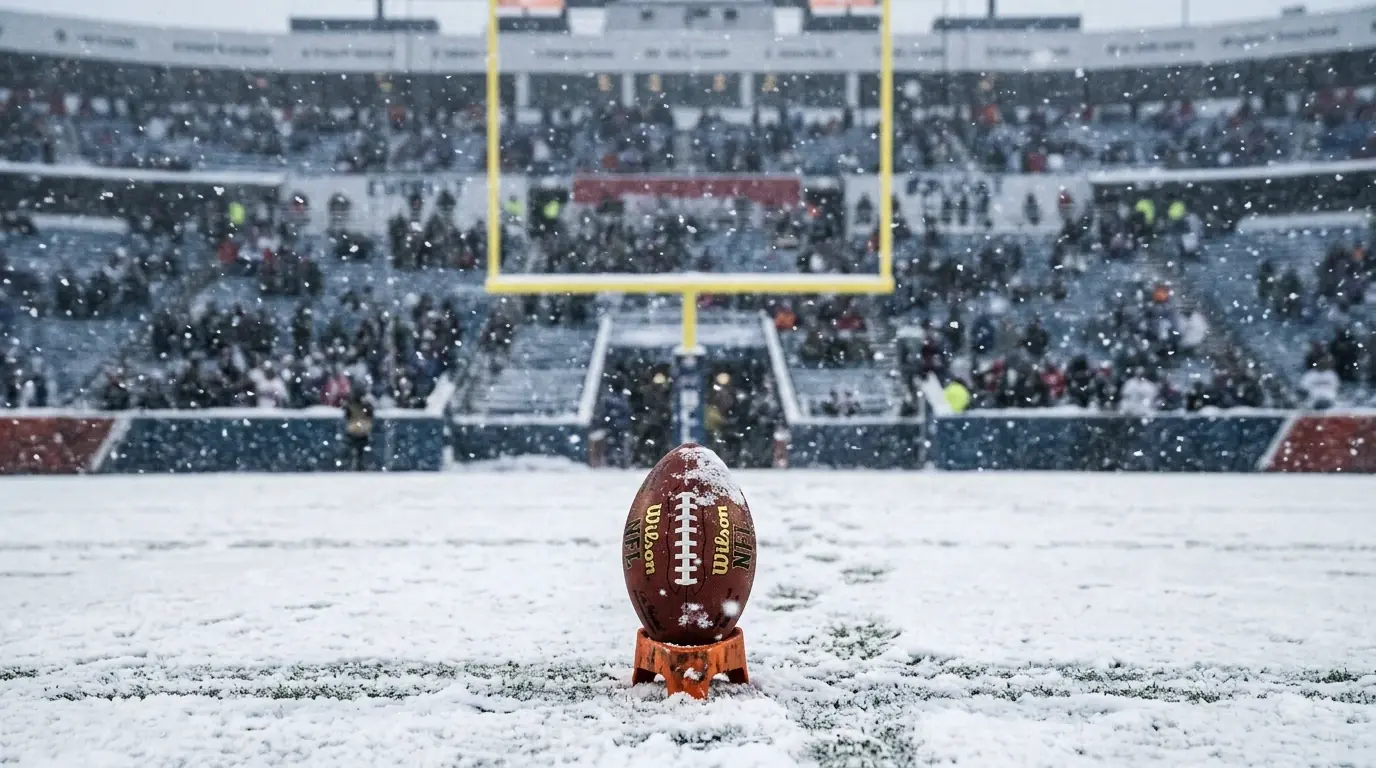
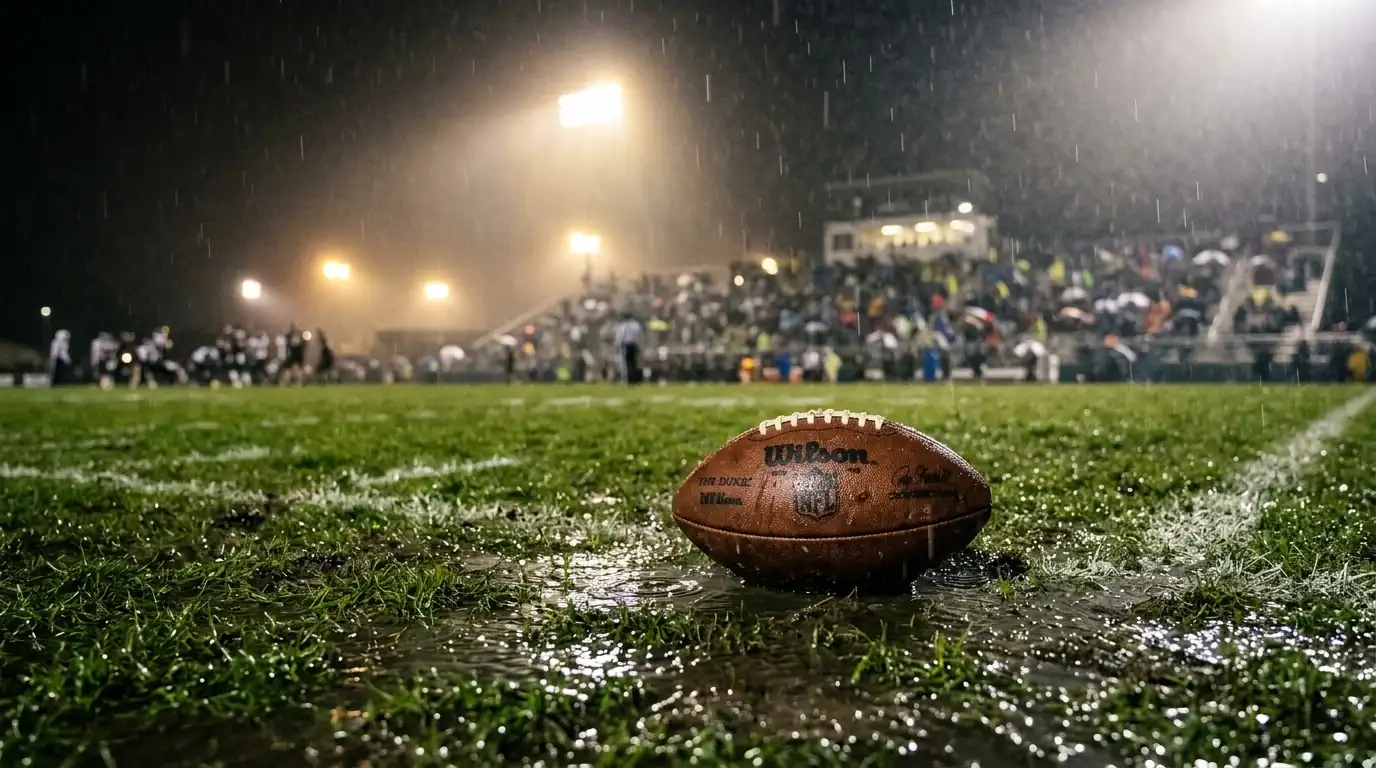
The mechanism is straightforward: a wet football is harder to secure. The synthetic leather surface of an NFL ball loses grip when wet, and receivers who rely on hands-catches rather than body-catches are most affected. Gloves help — modern receiver gloves are designed to maintain tackiness in moisture — but they do not eliminate the problem entirely, particularly in heavy rain where the ball arrives with a film of water on its surface.
What makes this data actionable for bettors is the asymmetry between how totals and props adjust. When rain is forecast, game totals move down — bookmakers and sharp bettors know that rain suppresses scoring. But individual receiver prop lines often stay close to their dry-weather projections, because the models that generate those lines weigh season averages, target share, and defensive matchup more heavily than weather. The weather penalty ends up distributed across the total but not adequately distributed across individual props.
Fumbles vs Drops: Different Causes
Drops and fumbles both increase in wet weather, but for different physical reasons, and the betting implications differ accordingly.
A drop is a failure to secure the catch at the point of reception. It is primarily a hand-ball-surface problem: the receiver’s grip on the wet football is insufficient to absorb the force of the throw. Drops increase most sharply in the first and second quarters of rain games, before receivers have fully adapted their catching technique. By the second half, many receivers have adjusted their hand positioning to compensate, which is why drop rates sometimes normalise after halftime even if the rain continues.
A fumble, by contrast, is a failure to maintain possession after the catch (or after a handoff). It is primarily a ball-security-under-contact problem: the wet ball is harder to tuck securely against the body, and a defender’s hit can dislodge it more easily. Fumble rates in wet weather are roughly 1.3 to 1.5 times the dry-weather baseline, a smaller multiplier than the drop-rate doubling but still significant over a full game.
The betting distinction: drops affect reception counts and yardage (prop markets). Fumbles affect turnovers and, by extension, scoring (total and spread markets). A game with elevated fumbles is higher-variance, not necessarily lower-scoring, because a fumble recovered by the offence changes nothing and a fumble returned for a defensive touchdown adds 7 points. Turnovers introduce chaos into the scoring distribution, which is why heavy-rain games occasionally produce surprisingly high totals when multiple defensive touchdowns result from fumble recoveries.
Prop Bets on Receivers in Rain
My approach to receiver props in rain games starts with target volume rather than receiving yards. A receiver who is projected for 8 targets in a dry game will still see roughly 7 to 8 targets in rain — quarterbacks do not fundamentally reduce their number of pass attempts in moderate rain. But the conversion rate from target to reception drops because of the elevated drop rate. Eight targets at a 75 percent catch rate yields 6 receptions. Eight targets at a rain-adjusted 68 percent catch rate yields 5.4 receptions — a difference that matters for reception props and, downstream, for yardage.
Quarterback fantasy production drops by 2.1 points per game in light-to-moderate rain, and that decline flows directly into the receiving game. If the quarterback is less productive, his receivers are less productive by definition. The receiving yards under is one of the most consistent weather-driven prop plays I track, particularly for secondary receivers (the WR2 or slot receiver on a team) whose target volume is less guaranteed than the primary option’s.
One category I avoid is tight end props in rain. Tight ends tend to run shorter routes and catch passes closer to their body, which partially offsets the wet-ball grip problem. Their drop rates increase less than wideout drop rates in rain, making tight end reception and yardage props less predictably affected by precipitation.
The Running Back Fumble Myth
There is a persistent belief among casual bettors that running backs fumble significantly more in wet weather. The data does not support this as strongly as the narrative suggests. Running back fumble rates do increase marginally in rain — roughly 1.2 times baseline — but the increase is smaller than for receivers because running backs carry the ball differently. A handoff is secured against the torso with two hands; a reception requires a catch-and-tuck sequence that is more vulnerable to the wet surface.
Where the myth causes problems is in anytime-touchdown-scorer markets. Some bettors fade running backs in heavy rain on fumble concerns, which creates mild value on the running back’s anytime TD line. If the passing game is suppressed and the running game absorbs a larger share of offensive plays, the lead running back’s touchdown probability actually increases despite the marginal fumble risk. The scoring opportunity outweighs the turnover risk in most rain scenarios.
My rule: bet against receivers in rain, not against running backs. The data supports the former far more robustly than the latter.
The Wet Ball and Your Bet Slip
Drop rates doubling from 3 to 6 percent in wet weather is one of the most actionable weather findings for prop bettors. It is specific, measurable, and — crucially — under-reflected in individual receiver prop lines. Game totals catch most of the rain effect because they are adjusted aggressively by sharp money. Receiver props catch less of it because they are set by models that underweight weather relative to volume and matchup data. That gap is where the edge sits, and it appears with reliable frequency across any NFL season where it rains on Sundays.
Is the drop rate uniform across receiver types?
Not exactly. Outside receivers who catch away from their body see the largest increase in drops during wet weather. Slot receivers and tight ends, who typically catch passes closer to the torso, are less affected. If you are targeting receiver unders in rain, prioritise outside wideouts over slot players.
Should I avoid first-touchdown-scorer markets in heavy rain?
Not categorically. First-touchdown-scorer markets shift in rain: running backs and goal-line specialists become more likely scorers because the passing game struggles to move the ball in the red zone. Wide receivers become less likely first scorers. Adjusting your selections toward rushers rather than receivers is more productive than avoiding the market entirely.
Published by the Weather Impact on nfl Betting team.