NFL Wind 20 mph Under Strategy: Maximizing Your Payouts
 Available in US
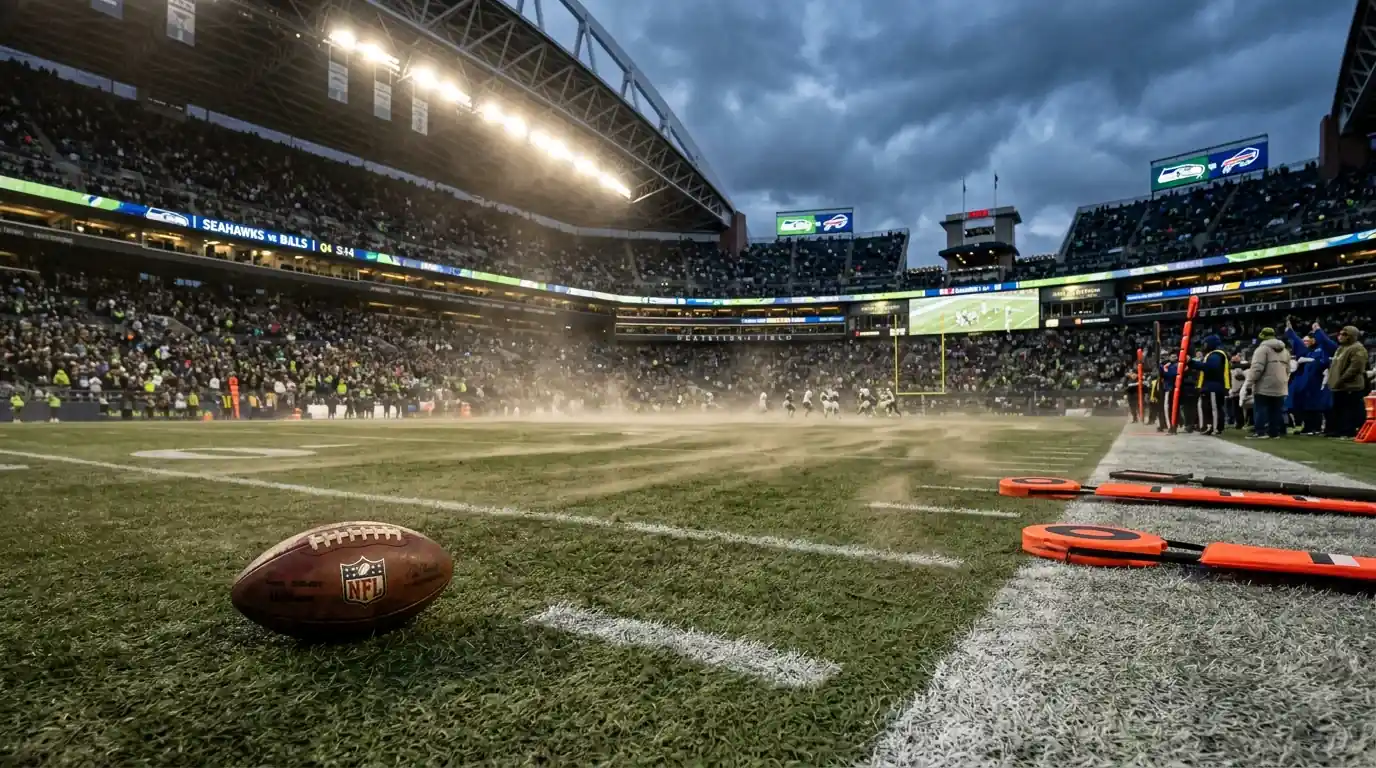
I remember the first time a 20 mph wind forecast genuinely changed my Saturday night. It was late November, a Bills-Patriots game with a total sitting at 44.5, and the National Weather Service had just bumped sustained winds from 14 to 22 mph at Highmark Stadium. Within ninety minutes the total dropped to 41, and the under still cashed by a comfortable margin. That single evening taught me more about the relationship between wind and NFL scoring than a full season of casual observation.
The number that anchors this entire discussion is 54 percent — the rate at which the under has hit in NFL games played in winds exceeding 20 mph since 2015, drawn from FOX Sports research. It sounds modest. It is modest, in isolation. But in a market where the bookmaker’s margin already eats into your edge, even a few percentage points of genuine predictive value can separate a profitable season from a break-even one. This article takes that 54 percent figure apart, examines its limitations, and asks the question every serious UK bettor should be asking: is it enough?
Explaining the 54 Percent Under Rate in Heavy Wind
A few years ago I started tracking every NFL game where sustained wind exceeded 20 mph at kickoff, cross-referencing closing totals with final scores. My own spreadsheet broadly confirmed the FOX Sports figure: unders cash at roughly 54 percent when the wind crosses that threshold. The average NFL baseline for unders — no weather filter applied — hovers around 50 percent by design, since bookmakers set lines to split action. So the wind is adding approximately four points of edge before we even consider the juice.
Where does that edge come from? Wind above 20 mph does three things simultaneously. It degrades deep and intermediate passing accuracy, which compresses offensive playbooks toward shorter routes and the run game. It makes field goals beyond 40 yards unreliable, removing scoring opportunities that would otherwise convert at around 75 percent. And it shortens punts, which occasionally gives a team better field position but more often simply reduces the total number of possessions by slowing the game’s rhythm. All three forces push the combined score downward.
The effect is not linear, either. Moving from 15 mph to 20 mph in sustained wind reduces passing production at roughly double the rate of moving from 10 to 15. Kevin Roth, the chief meteorologist at RotoGrinders, has called wind “the biggest impact on sports betting” — and the data bears him out. At 20 mph you cross a threshold where the degradation accelerates, which is precisely why the market moves so aggressively once forecasts cross that line.
One thing I have noticed in my own tracking: the 54 percent figure is an average across all game types. Division rivals who grind out low-scoring games anyway inflate the number slightly, while high-powered offences that still air it out in breezy conditions pull it down. The headline figure is useful as a starting point, but the real work begins when you layer roster context on top of the weather data.
Sample Size and Survivorship
Here is where most weather-betting articles stop: “the under hits 54 percent, go bet it.” I have lost enough money chasing small-sample edges to know that the first question should always be about the denominator. How many games actually get played in 20+ mph sustained winds during an NFL season?
The answer is fewer than you might expect. Across a typical 17-week regular season with 272 games, only a handful — usually between 8 and 15 — see sustained winds reach or exceed 20 mph at kickoff. Over the FOX Sports study window from 2015 onward, that gives us a working sample of perhaps 80 to 120 qualifying games. That is enough to identify a trend but nowhere near enough to call it statistically bulletproof. Ivetta Abramyan, a meteorologist and co-founder of Bettor Weather, put it plainly: even with solid weather forecasting, “you still only have a handful of games that have been played that fit that specific criteria.”
Survivorship bias compounds the problem. The games that make the highlight reels — the Buffalo blizzards, the Chicago lakefront gales — tend to be extreme outliers. If your mental model of a “20 mph wind game” is shaped by those memorable contests, you will overestimate the effect size for games that barely cross the threshold. A steady 21 mph breeze on a mild October afternoon in Cleveland is a different animal from a 28 mph gust-driven squall in January Foxborough, even though both qualify under the same umbrella.
My rule of thumb: treat 54 percent as a directional signal, not a guarantee. It tells you that the under has genuine tailwinds (pun intended) in high-wind games, but it does not tell you by how much any individual game’s total should move. For that, you need to zoom in on the specific conditions — sustained speed, gust behaviour, stadium geometry, and which offences are involved.
Wind vs Gust Distinction
The single biggest mistake I see UK bettors make with NFL weather data is conflating sustained wind speed with gust speed. A forecast reading “winds 12 mph, gusts to 25 mph” is not the same as “sustained 25 mph winds,” and treating them equally will wreck your model.
Sustained wind is the average speed measured over a two-minute window. Gusts are momentary spikes that typically last only a few seconds. The NFL does not play in a wind tunnel with a constant 20 mph flow — conditions fluctuate throughout a game. When the sustained reading sits at 12 mph but gusts hit 25, the passing game suffers intermittently rather than consistently. A quarterback can still complete intermediate routes during lulls, and kickers can time their attempts between gusts. The scoring suppression exists, but it is far less dramatic than in a game with genuinely sustained 20+ mph winds.
At wind speeds above 25 mph sustained, the picture changes drastically. Passing production drops by more than 10 percent, and running backs pick up an average of 5 additional fantasy points as offences abandon the air entirely. That is the zone where the under becomes a near-automatic lean rather than a marginal edge. But games with sustained 25+ mph winds are rare — perhaps three to five per season across the entire league.
For practical purposes, I classify wind games into three tiers. Tier one is 15 to 19 mph sustained: the passing game bends but does not break. Tier two is 20 to 24 mph sustained: this is the 54-percent-under zone, where real scoring suppression begins. Tier three is 25 mph and above: the game fundamentally changes, field goals beyond 35 yards become coin flips, and the under rate climbs well above 54 percent. Gust data matters most in tier one, where a few strong gusts can push an otherwise moderate game into tier-two behaviour for key drives. In tiers two and three, the sustained reading tells you almost everything you need to know.
Practical Bet Sizing
Knowing that unders hit at 54 percent in 20+ mph winds is only useful if you can translate that edge into a staking strategy that survives contact with the bookmaker’s margin. On a standard -110 line (the US convention, equivalent to roughly 1.91 decimal odds on most UK platforms), you need to win 52.4 percent of your bets just to break even. A 54 percent win rate gives you an implied edge of about 1.6 percent per bet — thin but real.
I size these bets at 1 to 2 percent of my bankroll, never more. The edge is genuine but small, and variance over 10 or 15 qualifying games per season can easily produce a losing run of four or five straight. The temptation after three consecutive under winners in windy games is to ramp up the stake, but that is precisely when discipline matters most. A 54 percent rate means you will lose 46 percent of the time, and those losses tend to cluster in ways that feel personal.
There is also the question of line timing. Ed Salmons, a veteran risk manager at Westgate SuperBook, has noted that sharp bettors begin hammering weather-affected lines as early as six days before kickoff once a front becomes visible in forecasting models. By the time the sustained-wind forecast is confirmed on Saturday morning UK time, the total has often already moved 1.5 to 2 points. If you are betting at the closing number rather than the opening number, your 54 percent edge may already be baked into the price. The real value sits in the window between Tuesday and Thursday, when forecasts begin to solidify but the passing yards impact of wind has not yet been fully priced.
Where the 20 mph Line Leaves You
The 54 percent under rate in 20+ mph wind games is one of the more reliable weather signals in NFL betting, but it is not a system — it is a starting point. The figure survives scrutiny better than most weather-betting claims because it aligns with observable physics: wind suppresses passing, compresses playbooks, and removes field-goal attempts. What it does not do is account for roster strength, game script, or the difference between a steady breeze and an erratic gust pattern. I have built nine seasons of weather-driven NFL models, and the lesson that keeps repeating itself is simple: the edge is real, the edge is small, and the edge belongs to bettors who respect both of those truths at the same time.
Is 54 percent enough edge after the UK bookmaker margin?
At standard -110 pricing (1.91 decimal), you need 52.4 percent to break even. A 54 percent hit rate gives roughly 1.6 percent edge per bet — thin but profitable over volume. The key is disciplined staking at 1 to 2 percent of bankroll per qualifying game, since only 8 to 15 games per season meet the 20 mph sustained-wind threshold.
Does gust speed matter more than sustained wind?
Sustained wind is the stronger predictor. Gusts are momentary spikes lasting seconds, so a forecast of 12 mph sustained with 25 mph gusts produces far less scoring suppression than 20 mph sustained. Gust data becomes most relevant in the 15 to 19 mph sustained range, where a few strong gusts can push key drives into genuinely disruptive territory.
Written by the editors at Weather Impact on nfl Betting.