Real-Time NFL Game Day Weather Tools for UK Bettors
 Available in US
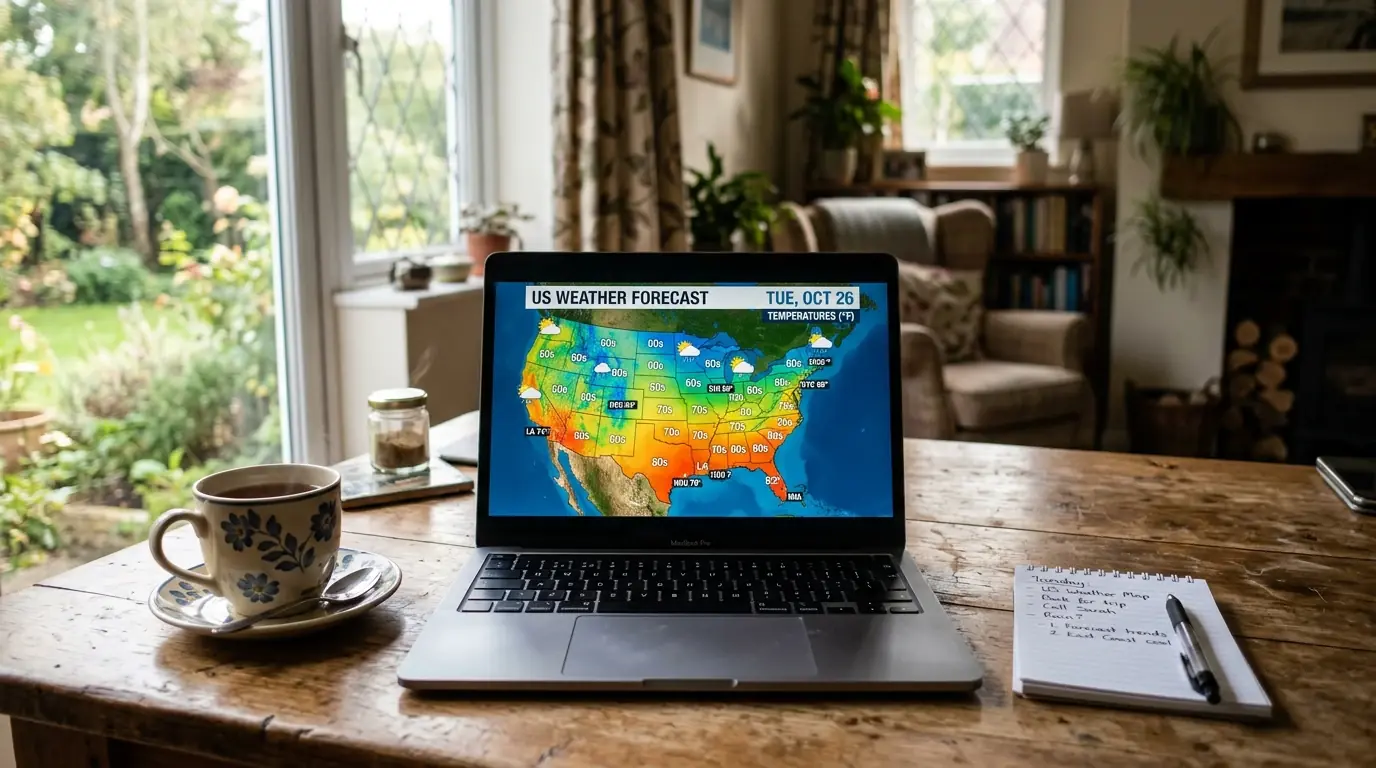
My Sunday routine during NFL season starts at 3:00 pm GMT, three hours before the first batch of early kickoffs at 6:00 pm. I make a coffee, open four browser tabs, and spend about twenty minutes checking weather conditions for every outdoor game on the slate. It sounds excessive. It is not. Those twenty minutes have been the single most consistently profitable habit in my entire NFL betting process — more valuable than film study, more actionable than injury reports, and more reliable than any tipster service I have ever tried.
The challenge for UK-based bettors is that most NFL weather resources are built for American users operating on American time zones with American weather services. Translating that workflow to a British schedule requires a few adjustments — different primary sources, different timing, and a different understanding of when forecast data becomes reliable enough to act on. This is the routine I have refined over seven seasons of betting NFL totals and props from the UK.
Weather Aggregator Tools and Primary Forecasting Sources
Every weather check I do starts with the National Oceanic and Atmospheric Administration — NOAA — specifically their hourly forecast pages for each stadium’s location. NOAA is the upstream source that almost every other weather service derives its NFL forecasts from. By going directly to NOAA, I am reading the data before it has been filtered, simplified, or delayed by third-party aggregators.
NOAA’s hourly forecasts give me temperature, wind speed, wind direction, precipitation probability, and humidity for each hour of the day, localised to the exact coordinates I request. I have bookmarked the forecast pages for every open-air NFL stadium and the five retractable-roof venues. Pulling up the forecast for, say, Highmark Stadium at kickoff time takes about fifteen seconds. I note four numbers: temperature, sustained wind, wind direction, and precipitation chance. Those four numbers determine whether I need to adjust my view of any total or prop for that game.
The key detail that many bettors miss is timing. NOAA updates its hourly forecasts four times per day, at roughly 6:00 am, 12:00 pm, 6:00 pm, and 12:00 am Eastern Time. For a UK bettor preparing on Sunday afternoon, the most relevant update is the 12:00 pm Eastern release, which lands at 5:00 pm GMT — just one hour before the early kickoffs. This update incorporates the morning’s radiosonde balloon data and satellite observations, making it significantly more accurate than the overnight forecast that most weather-betting services used to set their projections.
One limitation: NOAA’s forecasts are point-based, not stadium-specific. They tell you what the weather will be at a set of coordinates, not what it will feel like on the field inside a concrete bowl. I apply a mental discount for bowl stadiums — the enclosed structure dampens field-level gusts considerably — and leave the number as-is for open-end venues. This adjustment is rough, but it is better than treating every NOAA wind reading as gospel.
UK punters should apply these forecasting routines, especially when looking at the weather betting guide for NFL London games held at open-air venues.
Met Office for London Fixtures
The NFL has played regular-season games in London every year since 2007, and the schedule has expanded to include multiple fixtures per season. These games — typically held at Tottenham Hotspur Stadium or Wembley Stadium — require a different weather source entirely. NOAA does not cover the United Kingdom. For London games, the Met Office is my primary forecast provider.
The Met Office’s hourly forecast for north London (Tottenham) or northwest London (Wembley) provides the same core data points I need: temperature, wind speed, wind direction, and precipitation probability. The update cycle is similar to NOAA’s, with fresh data arriving every few hours. For a London fixture with a typical 2:30 pm GMT kickoff, I check the Met Office forecast at noon and again at 1:00 pm for any last-minute revisions.
London’s weather introduces variables that rarely apply to American venues. Wind speeds in the London area are generally lower than at exposed NFL stadiums in the Great Lakes or Northeast, but rain probability is higher. An October game at Tottenham Hotspur Stadium with a 70 percent chance of rain and 8 mph wind is a different weather profile from a December game in Buffalo with 10 percent rain probability and 22 mph wind. Both affect scoring, but through different mechanisms. Rain degrades ball security and increases fumble risk; wind degrades passing accuracy and kicking range. The London games tend to produce more turnovers rather than fewer passing yards.
Tottenham Hotspur Stadium is a modern fully enclosed bowl with a retractable grass pitch, and its tall, steep stands provide substantial wind protection. Wembley’s arch-topped design is more exposed, particularly at the upper levels, but the playing surface sits deep enough within the bowl structure that field-level wind is usually manageable. Neither venue produces the kind of wind effects you see at Highmark or Soldier Field. For London games, I weight precipitation and temperature more heavily than wind in my weather adjustments.
RotoGrinders and Aggregator Tools
After checking NOAA (or the Met Office for London games), my second tab is always an NFL weather aggregator. RotoGrinders runs the most widely cited version — a single dashboard showing weather conditions for every game on the slate, updated in near-real time. The dashboard gives you a quick visual scan: green for benign conditions, yellow for moderate weather, red for severe. It is designed for speed rather than depth.
The strength of aggregator tools is convenience. On a slate with 14 games, manually checking NOAA for every outdoor venue takes ten minutes. RotoGrinders compresses that to a glance. The weakness is that aggregators typically report a single wind speed and temperature without distinguishing between sustained wind and gusts, without showing wind direction relative to stadium orientation, and without accounting for the bowl-versus-open-end architectural differences I discussed in my tools comparison. The aggregator tells you that a game has a wind alert; it does not tell you whether that wind will be a crosswind, a headwind, or a blocked non-factor.
I use RotoGrinders as a screening tool, not a decision tool. If the dashboard shows green across the board, I can skip the detailed weather check and move straight to other research. If it shows yellow or red for a game I am interested in betting, I open NOAA for that specific venue and dig into the hourly data. The aggregator flag tells me where to look; the primary source tells me what to do.
Other aggregators worth mentioning include National Weather Service game-day forecasts on individual team pages and the weather sections of major fantasy football platforms. These all draw from the same upstream NOAA data, so the numbers should be consistent. Where they differ is in presentation and update frequency. Some update every hour; others update only twice daily. For a UK bettor checking conditions at 5:00 pm GMT, an aggregator that has not updated since the morning NOAA release is showing you stale data — and in fast-changing weather systems, stale data is worse than no data.
Timing Checks Around UK Kickoffs
The NFL’s three main Sunday kickoff windows create three distinct preparation timelines for UK bettors. The early window kicks off at 6:00 pm GMT (1:00 pm Eastern), the afternoon window at 9:05 or 9:25 pm GMT (4:05 or 4:25 pm Eastern), and the Sunday night game at 1:20 am GMT Monday (8:20 pm Eastern). Each window demands a different approach to weather monitoring.
For the 6:00 pm GMT window — which carries the most games and therefore the most betting opportunities — my weather check happens between 3:00 and 5:00 pm GMT. The NOAA 12:00 pm Eastern update (5:00 pm GMT) is the final major data refresh before those games kick off. If I can place my bets after that update but before kickoff, I am working with the best available forecast. In practice, I usually have a preliminary view based on the overnight forecast and refine it during that two-hour afternoon window.
The late afternoon window at 9:05 or 9:25 pm GMT is easier from a weather perspective. By that point, most of the early-window games are underway, and the NOAA 6:00 pm Eastern update (11:00 pm GMT) has not yet landed — but the weather at those kickoff locations is already observable in real time through stadium cameras and sideline reports. For a 4:25 pm Eastern kickoff, conditions at 4:00 pm Eastern are essentially the conditions for the game. I treat these games as near-confirmed weather events and bet with higher confidence on weather-related angles.
The Sunday night game presents the most interesting timing challenge. The 1:20 am GMT kickoff means most UK bettors have placed their bets hours earlier, often before the weather picture has fully resolved. Evening games in November and December frequently experience sharper temperature drops than daytime games — a 10-to-15-degree Fahrenheit decline between afternoon and night is common in outdoor Midwest and Northeast venues. If the forecast shows a 5:00 pm temperature of 38 degrees and an 8:00 pm temperature of 24 degrees, the game is being played in sub-freezing conditions that the afternoon temperature might have obscured for a bettor who checked early.
My Thursday-to-Sunday cadence works like this. On Thursday, I scan the five-day forecast for Sunday’s outdoor games, noting any games with potential weather concerns. This is too early for precision but useful for flagging which games to monitor. On Saturday morning, I check again — the 48-hour forecast is substantially more accurate than the five-day outlook, and any games with genuine weather threats will now show up clearly. On Sunday afternoon, the final check. Three touches, each more precise than the last, each feeding into the same set of questions: Is there wind above 15 mph? Is there rain or snow? Is the temperature below 40 degrees? If the answer to any of these is yes, I open the detailed analysis and adjust my positions accordingly.
Make weather checking a core part of your routine with the premier NFL weather betting platform.
Twenty Minutes That Shape the Entire Slate
The routine I have described is not complicated. It requires no paid subscriptions, no proprietary data feeds, and no specialist meteorological training. NOAA is free. The Met Office is free. RotoGrinders is free. The only cost is twenty minutes of focused attention at the right time on a Sunday afternoon. What those twenty minutes give you is something most casual bettors never have: a clear picture of the physical conditions under which each game will be played, checked against data that is accurate to within a few hours of kickoff. Every total on your slip, every quarterback prop, every kicker points line — they all carry an implicit weather assumption. The question is whether that assumption is yours or the bookmaker’s. I prefer it to be mine.
When is the best time for UK bettors to check NFL weather?
For the 6:00 pm GMT kickoff window, check between 3:00 and 5:00 pm GMT. The key NOAA update at 12:00 pm Eastern (5:00 pm GMT) provides the most accurate pre-game forecast. For late afternoon games, real-time stadium observations are available by kickoff and provide near-confirmed conditions.
Is NOAA reliable for NFL stadium forecasts?
NOAA is the upstream source that most NFL weather services derive their data from, making it the most authoritative free option available. The limitation is that NOAA forecasts are point-based rather than stadium-specific, so field-level conditions in bowl stadiums may be calmer than NOAA suggests. Apply a mental discount for enclosed venues.
Do I need a paid weather service for NFL betting?
Not for the core weather check. NOAA, the Met Office, and free aggregators like RotoGrinders provide sufficient data for identifying weather-affected games and adjusting totals and props. Paid services may offer stadium-specific wind modelling or automated alerts, but the free tools cover 90 percent of what a weather-aware bettor needs.
Prepared by the Weather Impact on nfl Betting editorial staff.