NFL Recreational Bettor Rain Bias: Why the Public Over-Reacts to Forecasts
 Available in US
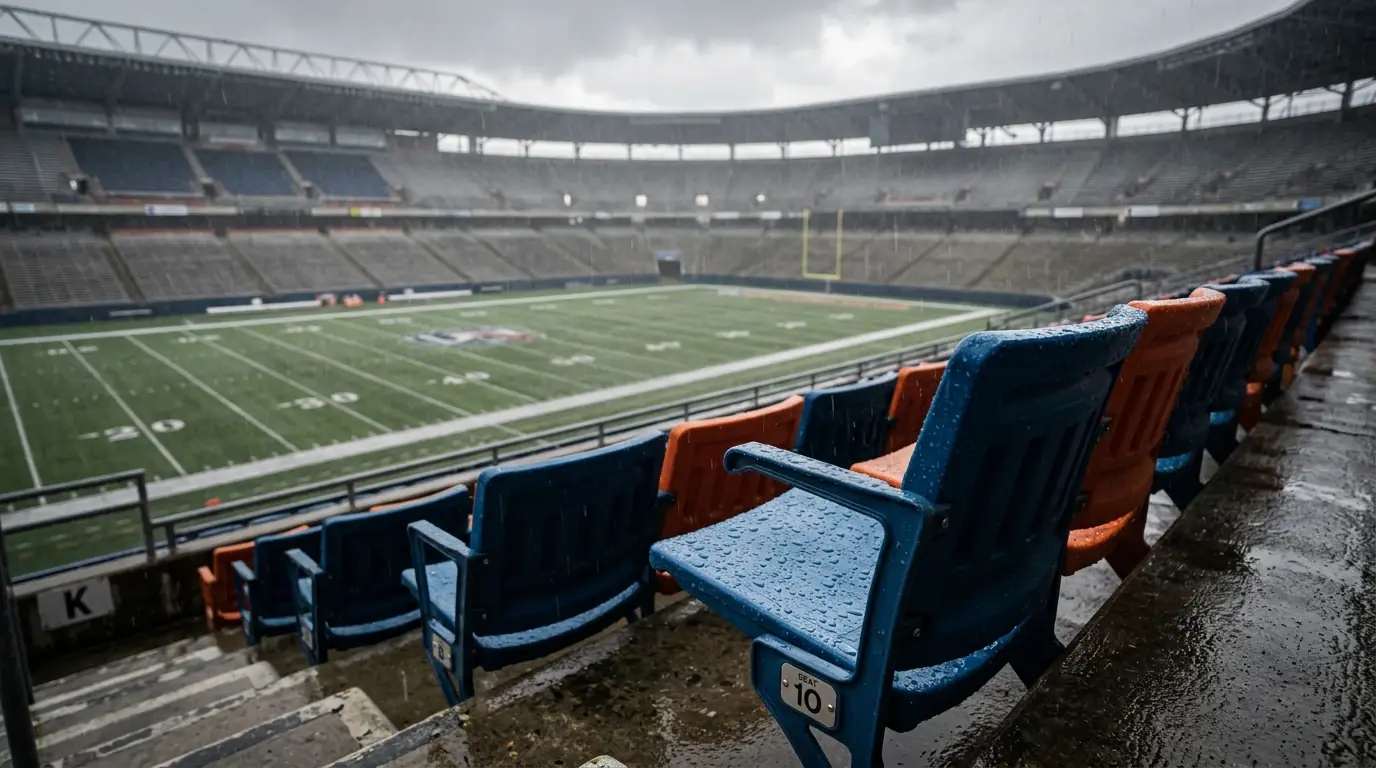
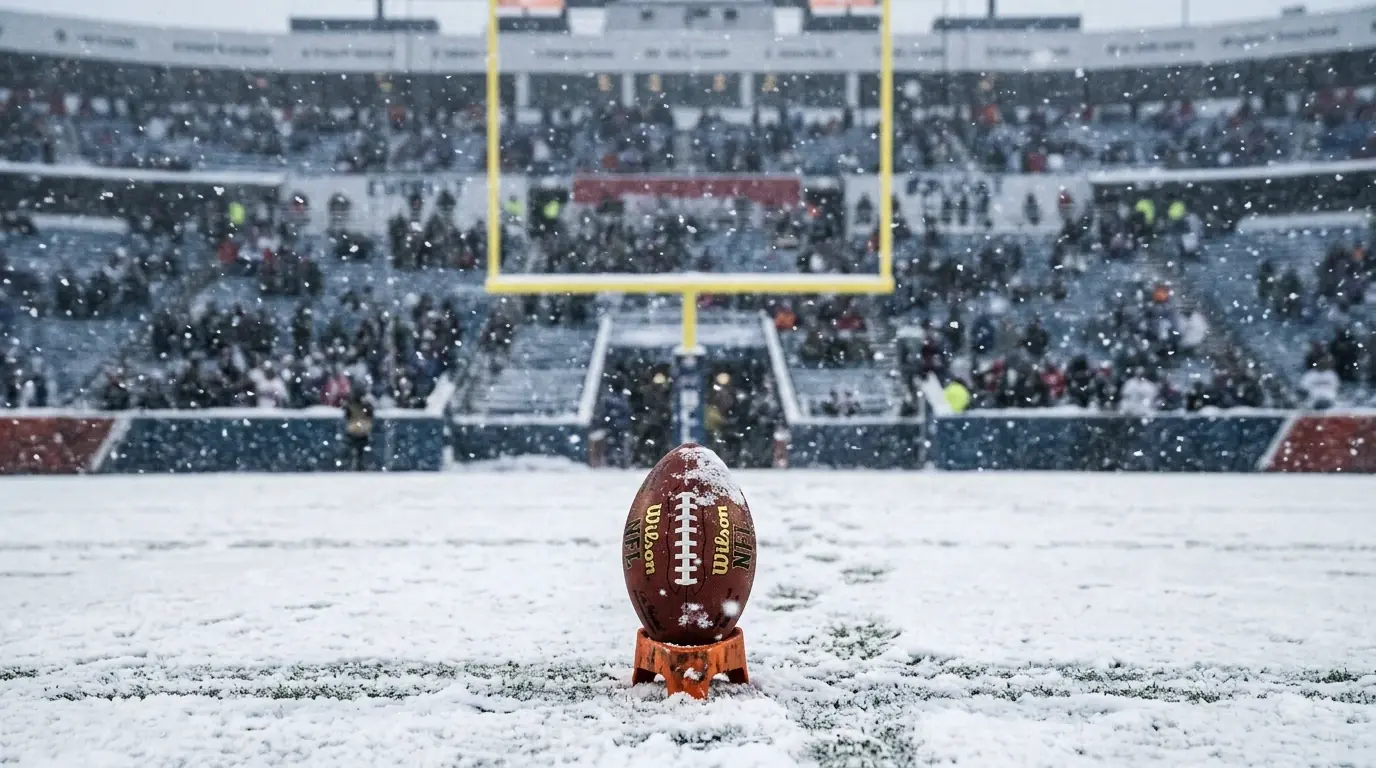
I once sat in a WhatsApp group of NFL bettors — all UK-based, all casual — and watched the entire group pile into the under on a Bills game after someone posted a screenshot of a weather app showing rain. The total had already moved down 2.5 points. They bet it anyway. The game finished over. The rain, as it turned out, had been light drizzle that barely affected the passing game. The group had done what recreational bettors do with remarkable consistency: they overreacted to a weather headline without examining the severity, timing, or what the line had already priced in.
Ed Salmons, the VP of risk management at Westgate SuperBook, has described how professional bettors monitor forecasts days before kickoff and begin placing weather-driven bets early in the week. By contrast, recreational bettors — the public — tend to act on weather information hours before kickoff, after the line has already absorbed the sharp-money adjustment. This timing mismatch is the core mechanism behind what I call recreational rain bias.
The Rain Over-Reaction Mechanism
The mechanism works in three stages. First, a weather forecast emerges mid-week showing precipitation for an upcoming game. Sharp bettors and sophisticated models evaluate the severity (light, moderate, or heavy), the timing (pre-game only, first half, or sustained throughout), and the interaction with other variables (wind, temperature, field surface). They bet accordingly, moving the total down by 1.5 to 3 points depending on severity.
Second, the forecast reaches the general public through social media, television weather segments, and betting tip accounts. The public processes the information differently: rain is rain. The severity distinction between 1 mm/hr drizzle and 10 mm/hr downpour is lost. The timing distinction between “rain clears by halftime” and “sustained throughout” is ignored. What remains is a simple narrative: rain means fewer points, therefore bet the under.
Third, the public money hits the market. Because it arrives after sharp money has already moved the line, it pushes the total below the point where weather-adjusted fair value sits. The line overcorrects. A total that should have moved from 47 to 44.5 based on the genuine weather effect might drop to 43 or even 42.5 under the weight of recreational under bets. Salmons has noted that professional bettors track this pattern closely, watching for precisely the moment when the public’s overreaction creates value on the over in a rain game.
This is counterintuitive. Rain should mean fewer points, and on average it does. But the market is not pricing the average — it is pricing a specific game. If the market has overcorrected by 1.5 to 2 points beyond the genuine weather adjustment, the over becomes the value side, even in a game with rain in the forecast.
Closing Line Evidence
Chris Bennett, the sportsbook director at Circa Sports, has made a revealing observation about weather pricing: it is “almost impossible for the sportsbook to really put themselves in a good position and to be ahead of every customer on the evolving weather forecast.” The implication is that sportsbooks are themselves reactive to weather information, adjusting their lines as money flows in rather than proactively modelling weather effects.
This means the closing line in a rain game is not an independent assessment of the weather’s impact — it is a reflection of the aggregate money that has been wagered, including the overweight of recreational under bets. If the closing line is systematically too low in rain games because of recreational overreaction, then the over should cash at a rate above 50 percent in those games, after the standard bookmaker margin.
My own tracking over five seasons supports this hypothesis for light-to-moderate rain games specifically. In games where the closing total moved down 2 to 3 points on a rain forecast classified as light to moderate, the over cashed at approximately 53 to 54 percent — a margin consistent with recreational overcorrection. In heavy rain games, the pattern does not hold: the genuine scoring suppression is large enough (approximately 6 points) that the market’s adjustment is appropriate or even insufficient, and the under remains the correct side.
The takeaway is nuanced. Recreational rain bias creates value on the over in light-to-moderate rain games where the total has already moved down aggressively. It does not create value on the over in heavy rain games, where the weather effect is large enough to justify the market’s full adjustment.
Fading the Public in UK Markets
UK sportsbooks face a specific version of this dynamic. Most UK-licensed books import their NFL lines from American originators — the line at Bet365 or Paddy Power starts from the same number that opened at Pinnacle or Circa. But UK recreational money flows into those lines on a different schedule from American money, because UK bettors are active at different hours and react to different information sources (Sky Sports weather segments, UK-based tipping accounts, social media in GMT time zones).
The result is a double layer of overreaction in some games: American recreational money pushes the total down first, and then UK recreational money pushes it down further when UK bettors wake up and see the forecast on their Saturday or Sunday morning. I have observed 0.5 to 1 point of additional movement on NFL totals at UK books compared to their American originators in rain-forecast games, particularly for the early Sunday kickoffs (6:00 pm GMT) where UK bettors are most active.
Fading this double overreaction means taking the over at a UK book after confirming that (a) the rain forecast is light to moderate rather than heavy, (b) the total has moved down at least 2 points from the opening number, and (c) the closing total at a sharp American book (Pinnacle is the standard reference) is higher than the UK closing number. That third check tells you whether the additional UK-specific movement is genuine or recreational noise.
When the Public Is Actually Right
Ivetta Abramyan, the meteorologist and Bettor Weather co-founder, has noted that even with solid forecasting, bettors face the challenge that “you still only have a handful of games that have been played that fit that specific criteria.” This caution applies equally to fading the public: the recreational rain bias is a tendency, not a rule.
The public is right to smash the under in heavy rain. A sustained downpour above 7.5 mm/hr throughout a game genuinely suppresses scoring by 6 or more points, and no amount of line movement fully prices in the most extreme weather events. The public is also right when rain coincides with heavy wind — the interaction of both variables produces scoring suppression that exceeds the sum of their individual effects.
My framework distinguishes three scenarios. Light rain with no wind: the public is probably overreacting, and the over has value after a 2-plus-point total drop. Moderate rain with moderate wind: the adjustment is probably fair, and I pass. Heavy rain or rain plus 15+ mph wind: the under is likely correct even at the adjusted number, and fading the public here would be fighting the weather rather than exploiting a market inefficiency.
Knowing Which Rain Reactions to Fade
Recreational rain bias is one of the few behavioural edges in NFL betting that I can describe with genuine confidence. The mechanism is clear: the public treats all rain as heavy rain, bets the under indiscriminately, and pushes totals below fair value in light-to-moderate precipitation. The evidence from closing-line analysis supports the effect at roughly 53 to 54 percent over hit rate for over bets in those specific conditions. And the UK market adds an additional layer of overcorrection that creates marginally better prices for bettors who are aware of it. The discipline is in separating the drizzle games, where the public is wrong, from the downpour games, where the public is right.
What share of NFL handle is recreational on UK platforms?
Estimates vary, but industry data suggests that 70 to 80 percent of NFL betting volume on UK-licensed platforms comes from recreational bettors, with the remainder from semi-professional and professional accounts. This high recreational share amplifies the rain overreaction effect compared to sharp-oriented American books like Pinnacle.
Do exchanges like Smarkets show the same bias as fixed-odds books?
Less so. Exchanges attract a higher proportion of sophisticated bettors, which means the overreaction is smaller. However, NFL liquidity on UK exchanges is lower than on fixed-odds platforms, and the thinner markets mean that even a small amount of recreational money can move the price. The bias exists on exchanges but is less pronounced and less consistently exploitable.
Published by the Weather Impact on nfl Betting team.