NFL Weather and Concussion Correlation: Late-Season Cold Game Risk
 Available in US
A medRxiv preprint analysing over 1,557 NFL games across eight seasons found that concussion risk increases during the second half of the season and in games played in cold weather. The study did not establish causation — the mechanism linking cold conditions to brain injury rates is not fully understood — but the correlation was statistically significant and has implications for anyone modelling NFL player performance in late-season weather games.
This is a sensitive topic. Betting on the consequences of player injuries raises ethical questions that I address directly at the end of this article. But the data is real, and ignoring it does not make it disappear. Understanding the concussion-weather correlation helps bettors make more accurate prop assessments without requiring anyone to celebrate or profit from individual injuries.
The medRxiv 1,557-Game Study
The study, published as a preprint on the medRxiv server and based on NFL data from the 2012 through 2019 seasons, analysed concussion incidence as a function of game-day conditions, time of season, and playing surface. The dataset included 1,557 regular-season and playoff games, encompassing thousands of individual player-game observations.
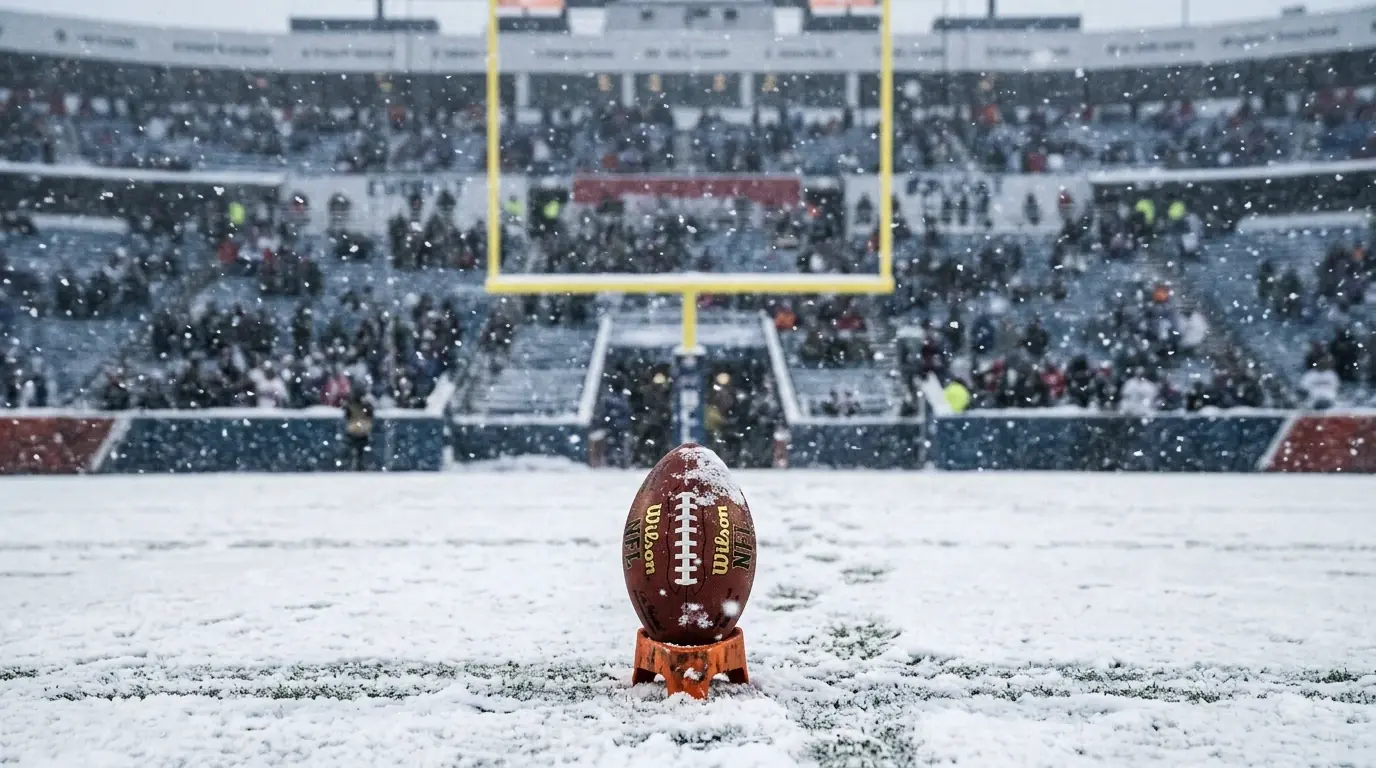
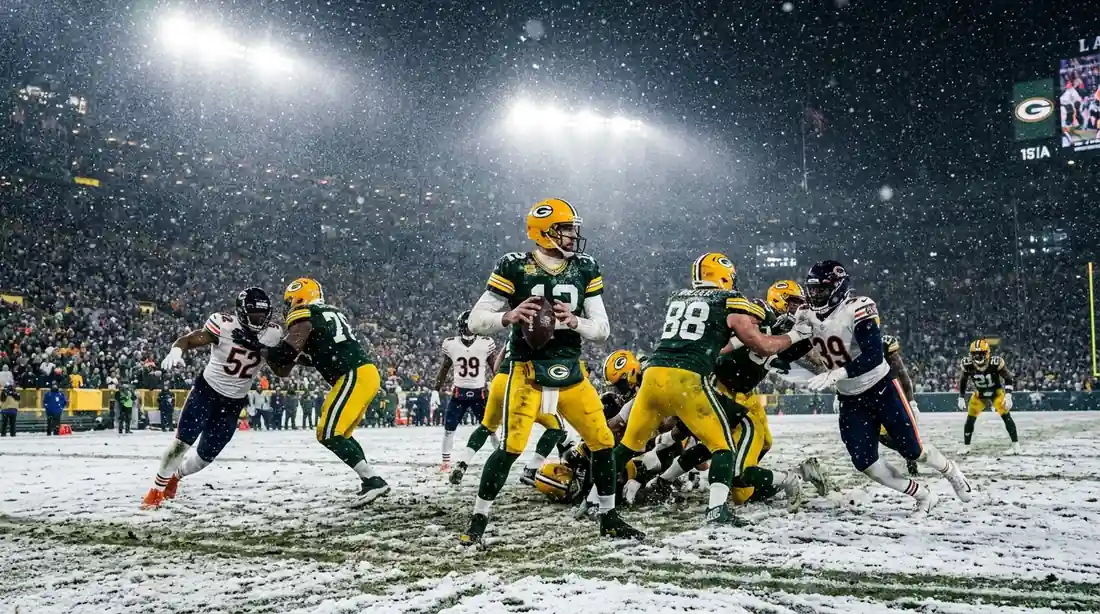
The headline finding was a statistically significant increase in concussion incidence during the second half of the NFL season (weeks 10 through 17) compared to the first half. When the researchers controlled for weather variables, cold-weather games showed elevated concussion rates relative to games played in moderate or warm conditions. The effect was most pronounced at temperatures below 40 degrees Fahrenheit (4 degrees Celsius), where the concussion rate per game was approximately 15 to 20 percent higher than in games played at 50 to 70 degrees Fahrenheit.
The proposed mechanisms are speculative but plausible. Cold temperatures may reduce the elasticity of the muscles and ligaments that stabilise the neck and head, making players more vulnerable to the rotational forces that cause concussions. Cold-weather games also tend to involve more running plays and short-yardage situations, which increase the frequency of high-impact collisions at the line of scrimmage. And cumulative fatigue over the season may compound the effect: a player who has absorbed 14 weeks of physical contact is more susceptible to brain injury than the same player in week 3, regardless of weather.
The study’s limitations are important. It was a preprint, meaning it had not undergone full peer review at the time of publication. The dataset included seasons before the NFL’s enhanced concussion protocols were fully implemented, which may affect the comparability of older and newer data. And the cold-weather correlation does not account for all confounding variables — teams that play late-season cold-weather games tend to have different roster compositions and playing styles from teams that do not.
The Late-Season Cumulative Effect
One of the study’s most interesting findings was that the concussion rate increase in the second half of the season persisted even after controlling for weather. Cold weather amplified the effect, but the baseline late-season increase existed independently of temperature. This suggests that cumulative physical wear — 10 to 14 weeks of full-contact games plus practices — degrades the body’s ability to absorb and recover from impacts.
For bettors, the cumulative effect is relevant because it introduces a source of variance that is not captured in most prop-market models. A quarterback who has been sacked 30 times through the first 12 weeks of the season is at elevated risk of missing time in weeks 13 through 18, not because any single hit in week 14 is more dangerous than a hit in week 4, but because the cumulative damage has reduced his resilience. Prop lines that are set based on season-long averages may not fully account for this late-season degradation.
The late-season effect is not unique to concussions. Soft-tissue injuries (hamstring, groin, ankle) also spike in the second half of the NFL season, particularly in cold-weather games where muscle pliability is reduced. The combined effect of increased concussion risk and increased soft-tissue injury risk creates a late-season volatility premium that is most pronounced in outdoor cold-weather games at stadiums in the northern United States.
Implications for Player Prop Betting
The concussion-weather correlation does not translate directly into a betting strategy centred on predicting which players will be injured. That would be both ethically problematic and practically impossible — concussions are inherently unpredictable events that depend on the specific dynamics of individual plays. What the data does inform is a broader adjustment to late-season player prop models.
If concussion risk is elevated by 15 to 20 percent in cold-weather games, the probability of any given player exiting the game before its conclusion is marginally higher than in warm-weather games. This affects player prop expected values because props are settled on actual in-game performance, and a player who exits in the second quarter due to a concussion will almost certainly fall short of his passing yards, receiving yards, or rushing yards line.
My approach is not to bet against specific players based on concussion risk but to apply a small discount to the expected value of all offensive player props in late-season cold-weather games. That discount — roughly 2 to 3 percent off the baseline expected value — reflects the elevated probability of game-exit events that would prevent a player from completing a full game’s worth of production. The discount is small enough that it rarely changes a bet decision on its own, but it adds up across a season of late-November and December prop bets.
The discount applies most strongly to high-volume players whose props require a full game’s worth of activity to hit. A wide receiver with a receiving yards line at 72.5 needs four quarters of route-running and targets to reach that number. If the probability of a game-interrupting event (concussion, soft-tissue injury, or equipment-related exit) is elevated by even a few percentage points, the expected value of the over shifts downward. Lower-volume props — such as a tight end’s receptions total at 3.5 — are less affected because the player can reach that threshold in two quarters, leaving more margin for an early exit.
I also apply the discount asymmetrically to visiting and home teams. The visiting team in a late-season cold-weather game faces both the environmental challenge and the fatigue of travel, which the medRxiv data suggests may compound the concussion risk beyond what weather alone would predict. My discount for visiting-team players in sub-32-degree late-season games is 3 to 4 percent, compared to 1.5 to 2 percent for the home team.
Ethical Caveats on Injury Betting
I want to be explicit about the ethical boundaries I draw in this area. Using concussion data to inform prop-market adjustments is, in my view, acceptable when the adjustment is applied at the population level (all offensive players in cold-weather games) rather than targeted at individuals. I do not bet on player exit markets, injury-specific props, or any market that directly prices whether a named player will be injured during a game.
The reason is straightforward: profiting from individual injuries creates incentive structures that are corrosive to the sport and disrespectful to the players who bear the physical cost. The concussion-weather data is useful as background information that improves the accuracy of my broader models. It is not a weapon to be aimed at specific human beings.
UK-licensed operators generally do not offer markets that explicitly price player injuries during a game, which makes this boundary easier to maintain than it might be on unregulated platforms. The Gambling Commission’s framework prohibits certain categories of ethically problematic markets, and individual player injury betting falls within the spirit (if not always the letter) of those prohibitions.
Data, Decency, and Your Late-Season Model
The concussion-weather correlation is a real statistical finding with real implications for NFL prop modelling. It tells us that late-season cold-weather games carry elevated player-exit risk, which reduces the expected value of individual offensive props by a small but measurable amount. The data is worth knowing. It should be applied with care, at the population level rather than the individual level, and with full awareness that behind every data point is a person absorbing physical punishment for our entertainment. Use the information responsibly.
Is the correlation strong enough to bet first-half player exits?
No. The concussion-weather correlation describes a population-level trend, not an individual-game prediction. The elevated risk is approximately 15 to 20 percent higher than baseline, which translates to a small adjustment in expected prop values — not a basis for betting on specific player injuries or exits.
Does the data control for player position?
Partially. The medRxiv study reported aggregate concussion rates across all positions. Position-specific analysis showed that skill-position players (receivers, running backs, defensive backs) had higher concussion rates than linemen, but the cold-weather amplification was not broken out by position in the published preprint. More granular position-specific data may emerge as the research progresses through peer review.
Prepared by the Weather Impact on nfl Betting editorial staff.